Home / Water & Watersheds / Your HOA Cannot Ban a Water-Wise Yard in Texas

Your HOA Cannot Ban a Water-Wise Yard in Texas

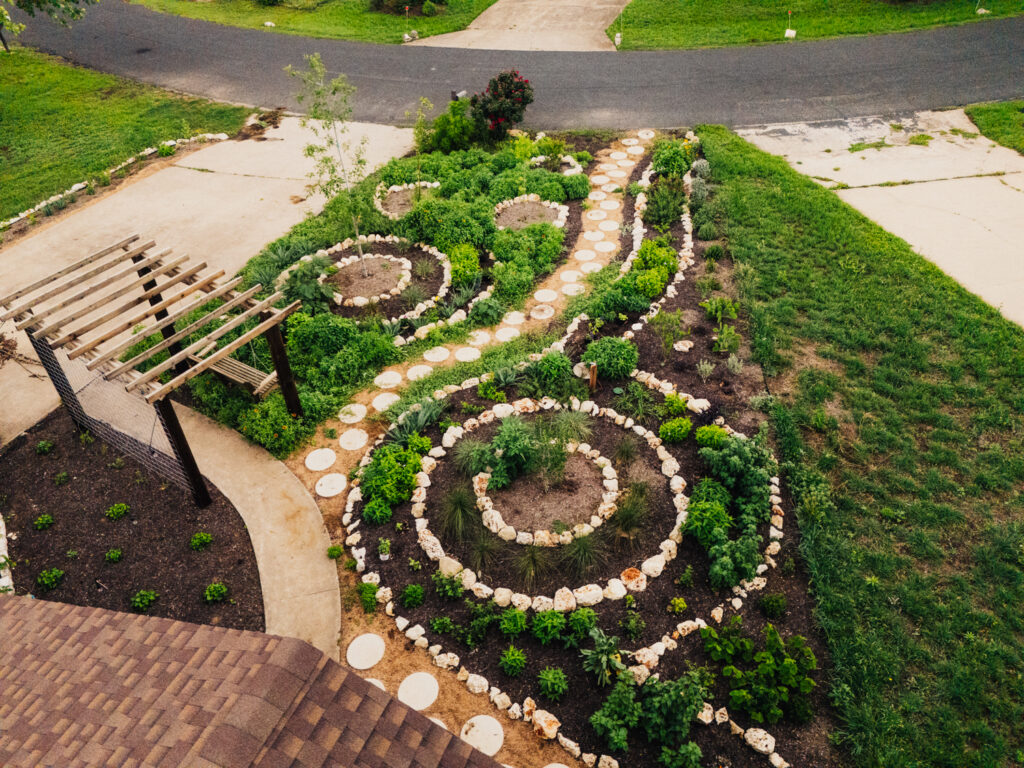
A client of ours pulled out their turf and put in a native bed. Less water, more pollinators, the whole thing. Their HOA sent a letter calling it aesthetically incompatible with the neighborhood and threatening a fine.

That letter wasn’t enforceable. A Texas law voids exactly that kind of covenant, and it’s been on the books since 2013. Most homeowners have never heard of it. A fair number of HOA boards haven’t either.

The foundation: Texas Property Code 202.007

In plain terms, a property owners association cannot unreasonably deny or withhold approval of drought-resistant landscaping, and cannot rule it aesthetically incompatible with the neighborhood.

The important part is what happens to a rule that conflicts with this. Any covenant that violates Section 202.007 is void, regardless of when the HOA wrote it, since state law overrides the association’s own documents on this point.

The statute covers xeriscaping, drought-resistant plants, rainwater harvesting including barrels and systems, drip irrigation and efficient watering equipment, and composting.

One honest caveat: the statute doesn’t tightly define what counts as drought-resistant landscaping. That ambiguity works in both directions, and it’s the main reason documentation matters so much later in this process.

What changed in 2025

Three bills went considerably further, all taking effect on 1 September 2025, and this is the part almost nobody has caught up with yet.

HB 517. Adds Section 202.008 to the Property Code. An association has to suspend enforcement of any rule requiring you to plant, install, or maintain grass, turf, or green vegetation while your property is under a residential watering restriction. They can’t penalize you for a brown lawn during a drought the city or utility caused. See the bill’s history

HB 1432. Amends Section 202.007. It confirms that an association can’t prohibit drought-resistant landscaping in place of natural turf, and closes a loophole that let associations demand a landscape architect’s stamp before they’d even review a plan. Your own outline or diagram with a plant list is sufficient to submit. See the bill’s history

HB 2269. An association can’t require you to plant, install, or maintain living grass or turf. This is the one that genuinely opens the door to full xeriscaping, native gardens, and artificial turf, if that’s your preference. See the bill’s history

What your HOA can still do

This isn’t a license to do whatever you like, and going in believing otherwise is how people lose arguments they should have won. Associations retain real authority. They can:

  • Require you to submit a plan for review
  • Enforce neatness and general maintenance standards
  • Set reasonable limits on plant height
  • Regulate aesthetic details within reason, such as borders and edging
  • Restrict the location, size, and color of rain barrels, though not ban them outright
  • Specify turf type, if you’ve chosen to keep turf

The law doesn’t ask an HOA to like what you’re proposing, only that they allow the concept, which is a meaningful difference worth understanding before you push back on a rejection.

What to actually do

  • Submit a plan first. A sketch, a plant list, and a rough maintenance schedule. Under HB 1432 that’s genuinely enough, and leading with a plan makes you the reasonable party.
  • If they push back, cite 202.007 in writing, not verbally at a meeting, so there’s a record of what was asked and when.
  • Keep it maintained. Neatness is the one thing they can still enforce, so don’t hand them the argument. A tidy native bed is unassailable. A messy one is a maintenance complaint waiting to happen.
  • Consider certifying the yard as pollinator habitat or a monarch waystation. It adds a second layer of legitimacy that reads well to a board.
  • Document everything: photographs before and after, and every piece of correspondence.
  • Check your city ordinances too. Austin, San Antonio, and Dallas each layer additional protections on top of the state law.

The thing worth understanding about HOAs

What an HOA actually objects to is rarely the water savings themselves. It’s usually whatever the board believes will lower property values, and a bare dirt yard or a row of galvanized tanks along a fence line reads that way regardless of whether you agree with the assessment.

Once you understand that appearance is the real objection, the conversation stops being about water and turns into a design question, and design questions tend to have workable answers.

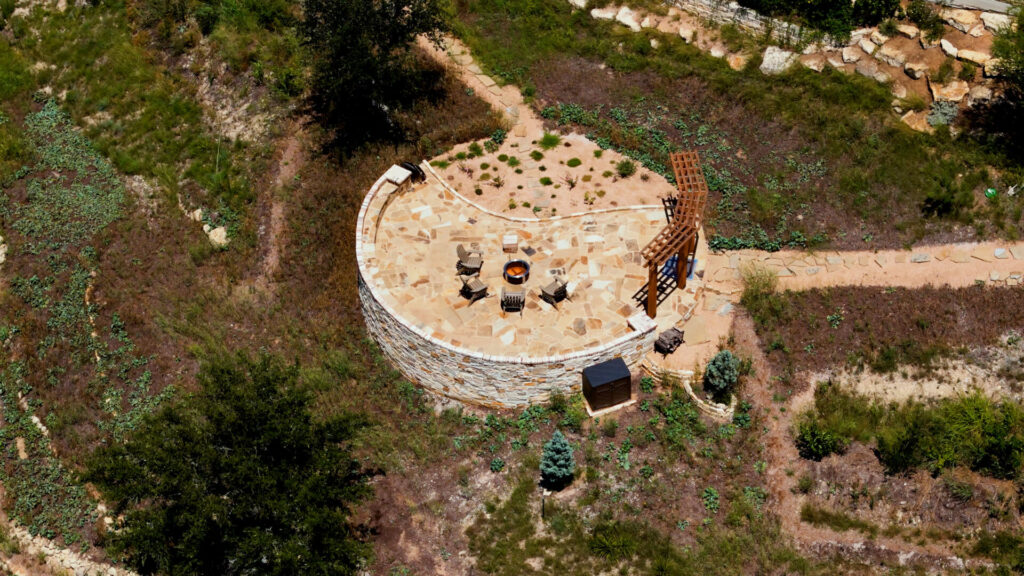
Symbiosis built a 60,000 gallon rainwater tank in a neighborhood whose HOA doesn’t allow rain tanks. It’s a concrete tank, partially underground, masoned on the outside, with a patio and pergola on top. If you don’t know what you’re looking at, you see a porch with a view. The association got what it wanted, and so did the client. You can see this project, and others like it, on Symbiosis’s Residential Projects portfolio.

Where we come in

Most of this you can do yourself, and we’d encourage it. Where people ask for help is in the design that satisfies both the covenant and the water goal at the same time, and in producing a plan a board will approve without a fight.

If you want that read on your own yard before you approach your HOA, our suburban landscape consultation is a two-hour, in-person visit built for exactly this, a clear read on your property’s water, soil, and native plant potential, no obligation to go further. From there, our Residential services cover the full design work, and on larger properties, Homestead and Rural services.

Common questions about HOAs and water-wise landscaping in Texas

Can my HOA make me keep a grass lawn?

No. Under HB 2269, an association can’t require you to plant or maintain living turf. It can still regulate what your alternative looks like in terms of neatness and height.

Can my HOA ban rain barrels?

No, though it can restrict where they sit and what size and color they are. A ban on the concept conflicts with Property Code 202.007. A rule about appearance generally doesn’t.

My HOA rules predate these laws. Do they still apply?

A covenant that conflicts with 202.007 is void regardless of when it was written. State law overrides the association documents on this point.

Can I be fined for a brown lawn during water restrictions?

Not while the restriction is in effect. HB 517 requires the association to suspend enforcement of grass and turf requirements for as long as your property is under a residential watering restriction.

Do I need a landscape architect to submit a plan?

Not anymore. HB 1432 confirmed that your own outline or diagram with a plant list is sufficient, and that an association can’t require it be prepared by a landscape architect or other professional.

What about front yard vegetable gardens or backyard chickens?

Those are governed by your individual covenants and city ordinance rather than a statewide protection. A bill on backyard chickens was introduced in 2025 but didn’t pass, so there’s no state law overriding an association ban on them. Check your covenants and your city rules.

What if my HOA rejects my plan anyway?

Ask for the rejection in writing with the specific covenant cited, then respond in writing citing 202.007. Most disputes end there. If it doesn’t, that’s the point to speak with an attorney.

Does this cover xeriscaping specifically, or just general drought-resistant landscaping?

Xeriscaping is explicitly named in Property Code 202.007 alongside drought-resistant plants, rainwater harvesting, and efficient irrigation. An HOA in Texas cannot ban xeriscaping outright, though it can still regulate how it looks and how it’s maintained, same as any other drought-resistant landscaping covered under the statute.

Where to start:

If this is the situation you’re in right now, HOA letter in hand, not sure how hard to push back, the fastest way to get a real answer isn’t more research. It’s someone walking your actual yard.

Symbiosis’s suburban landscape consultation is a two-hour, in-person visit built for exactly this: a clear read on your property’s water, soil, and native plant potential, plus a plan your HOA is more likely to approve without a fight. No obligation to go further afterward.

If you already know you want a full design, whether that’s because your HOA situation needs something more built-out or you’re just ready to move, our Residential services cover the complete design and installation process, from the same water-first read all the way through to a finished landscape.

Related Educational Context

For foundational context across land regeneration and water health, visit our Central Texas Land Regeneration Education hub.

Your HOA Cannot Ban a Water-Wise Yard in Texas

Texas law voids HOA rules against drought-resistant landscaping, and three 2025 bills went further. What…

Rainwater Catchment in Central Texas

How to size a rainwater tank for Central Texas' feast-or-drought rain pattern, and the story…

The NRCS Will Help Pay for Biochar on Texas Land

Last verified August 3, 2026. Payment rates and ranking dates change every year. Confirm current…

Why We Started Building Homes (And How We Do It Differently)

Companion article to our video Why We Started Building Homes (And How We Do It…

Disaster Recovery Grants for Texas Landowners: The 2026 Guide

Last verified August 1, 2026. Program rates and deadlines change. We update this page as…