
Last verified August 1, 2026. Program rates and deadlines change. We update this page as windows open and close.
Fire, flood, drought, ice. If you own land in Texas long enough, one of them will find you. What most landowners don’t know is that there’s real money available to help you recover, and much of it goes unclaimed because nobody explains it until the application window has closed.
This guide covers every major program, federal, state, and the tax layer underneath, with the actual rates, caps, and deadlines. It’s a companion to our field-level work on fire in the Texas Hill Country and applying wildfire science to land stewardship.
Open Right Now (as of August 1, 2026)
Three windows are live for the summer 2026 Hill Country floods:
| Window | What | Deadline |
|---|---|---|
| ECP sign-up, 24 counties | Up to 75% cost-share to restore flood-damaged farm and ranch land | ~September 25, 2026 |
| TDA STAR Fund, 29 counties | Up to $8,000 for fences, barns, and ag infrastructure | November 30, 2026 |
| §11.35 property-tax exemption | 15–100% exemption on damaged improvements | 105 days after the governor’s declaration |
ECP counties: Bandera, Blanco, Brewster, Crockett, Dimmit, Edwards, Frio, Gillespie, Kendall, Kerr, Kimble, Kinney, La Salle, Maverick, Medina, Menard, Pecos, Real, Schleicher, Sutton, Terrell, Uvalde, Val Verde, and Zavala.
Also coming: the state’s TRLI reforestation window is expected to open in fall 2026, and the stewardship plan it requires is the long-lead item. If you’ve lost trees to any disaster in the last ten years, start that plan now.
Before You Clear Anything: Document First
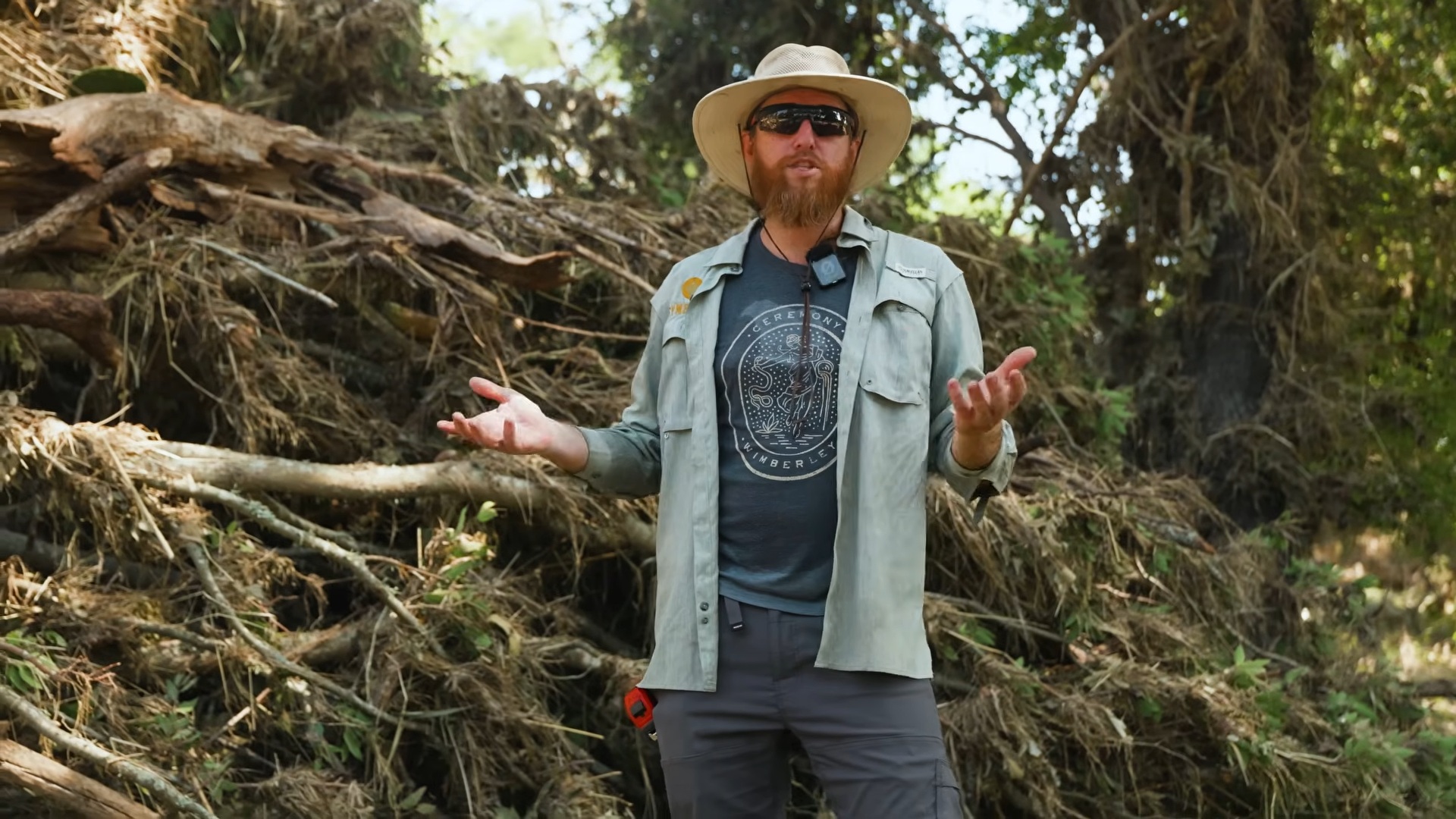
Every program below asks for evidence. Photos with dates and locations, acreage estimates, receipts, tree counts. If you clean up first and document second, you may have cleaned up your eligibility along with the debris. Walk the land, record everything, then start recovery.
Know Which Declaration You’re Under
Three different declarations unlock three different doors, and they’re constantly confused:
| Declaration | Who issues it | What it unlocks |
|---|---|---|
| Governor’s disaster declaration | Texas Governor | §11.35 property-tax exemption; STAR Fund activation |
| USDA Secretarial designation | Secretary of Agriculture | FSA programs: emergency loans, ECP, LFP, and related |
| FEMA Presidential declaration | President | FEMA Individual Assistance; federal disaster tax treatment |
Check your county: FSA disaster designations · FEMA declarations for Texas · farmers.gov Disaster Assistance Discovery Tool
The FEMA Myth, Dispatched Early
FEMA Individual Assistance will not help your land. It covers your primary residence, not pasture, fences, barns, timber, livestock, or equipment. FEMA’s own guidance routes farm and ranch losses to USDA. If your house was damaged, apply to FEMA. For everything beyond the house, the programs below are the real doors.
Federal Programs
Your county FSA office is the front door for most of these (find yours here). Two kinds of programs: disaster-triggered (ECP and EFRP, whose windows open county by county after a designation) and standing (ELAP, LFP, and TAP, which run on annual deadlines with no special window).
Emergency Conservation Program (ECP): farmland restoration
Rehabilitates farm and ranch land after natural disasters: debris removal, grading and shaping, restoring permanent fences and conservation structures, emergency water during drought. Up to 75% cost-share (90% for limited-resource producers), capped at $500,000 per disaster. Sign-up opens county by county. See the live 24-county window above.
Emergency Forest Restoration Program (EFRP): the forestland counterpart
Same structure as ECP but for non-industrial private forestland: debris removal, site prep, replanting, restoring forest roads and stream crossings. Up to 75% cost-share. Land must have had tree cover before the disaster and be capable of growing trees again. Ask your county FSA office whether your county is currently authorized.
The Standing Trio: file by March 1 of the year after your loss
- ELAP covers livestock, honeybee, and farm-raised-fish losses from adverse weather, plus feed and water transport costs.
- LFP covers grazing losses from drought (triggered automatically by U.S. Drought Monitor county status) or fire on federally managed grazing land. If your county has been in severe drought, you may already qualify. See our work on reviving overgrazed pasture for what comes after the payment.
- TAP pays 65% cost-share (75% for beginning, veteran, and limited-resource producers) to replant orchard trees, bushes, and vines. Standard deadline is 90 days from the disaster, and a July 2026 rule change removed the old 15% mortality threshold, so smaller losses now qualify.
Losses from 2026 under ELAP and LFP must be filed by March 1, 2027.
NRCS EQIP: the recovery-to-improvement bridge
EQIP isn’t disaster-specific, but after a disaster it funds fence replacement, livestock water systems, brush management, and erosion control, recovery work that doubles as permanent land improvement. Up to 75% cost-share, 90% for historically underserved producers (beginning, veteran, limited-resource, socially disadvantaged), who can also receive up to 100% of material costs in advance. Applications are accepted year-round and scored in periodic batches, so apply when you’re ready. One practice worth knowing is the Soil Carbon Amendment cost-share, which pays landowners to apply biochar; we cover how it works in Texas in our guide to NRCS biochar cost-share. The gateway to EQIP is a conservation plan, more on that below.
NRCS Emergency Watershed Protection (EWP): through your county, not you
Funds up to 75% of emergency measures like streambank stabilization and debris removal after floods, but only a sponsor can apply: your county, city, or Soil & Water Conservation District, within 60 days of the disaster. If your creek or riverbank took serious damage, call your county judge’s office or SWCD immediately and ask them to sponsor an EWP request covering your reach. You sign an access agreement; the sponsor files.
Texas State Programs
Texas A&M Forest Service: TRLI reforestation cost-share
The state’s flagship for disaster reforestation. Covers tree loss from fire, flood, wind and ice, tornado, hurricane, drought, insects, or disease within the last 10 years, old damage still qualifies. For non-federal, non-industrial landowners with a 10–150 acre project area; priority goes to north/central Texas woodlands and south/west Texas riparian corridors.
2026 rates: shredding/mulching $168.75/acre · prescribed fire $37.50/acre · direct seeding $337.50/acre · live cuttings $375/acre · seedlings $5.60 each · browse protection $4.90/seedling. Cap: $80,000 per landowner per year. Requires a written stewardship plan before reimbursement. The next window is expected in fall 2026, contact tfs.trli@tfs.tamu.edu.
TFS also runs Fire Mitigation and Prescribed Fire grants (prevention-side cost-share; burn grants require a certified and insured burn vendor), and maintains the Funding Connector, a searchable hub for everything else.
TDA STAR Fund: fast, small, donation-funded
Rebuilds fences, barns, and ag infrastructure after declared disasters (drought excluded). The current activation pays up to $8,000 per applicant across 29 flood-declared counties, deadline November 30, 2026. Apply at texasagriculture.gov or call 833-380-8282. It’s funded by private donations, so the pool is finite, so apply early.
TPWD: Landowner Incentive Program, plus free biologists
The Landowner Incentive Program pays 50–75% cost-share (reimbursement-based) for habitat work: native plant restoration, riparian restoration, brush management, wetland enhancement, prescribed burning. Funding windows vary, so call the LIP coordinator at (512) 924-6987 before planning around it. Separately, TPWD’s technical guidance program is free: a wildlife biologist will walk your land and help write a management plan. That’s a no-cost second opinion on any recovery plan, and the same plan supports wildlife-management property valuation.
TSSWCB: the quiet water-money agency
- Water Quality Management Plan (WQMP): the plan itself is written free through your local Soil & Water Conservation District, with implementation cost-share on top. Start at your county SWCD office and ask for current rates.
- Water Supply Enhancement Program: up to 70% cost-share for brush control (cedar, mesquite, saltcedar) to increase water yield, if your property falls in a designated project watershed. Comes with a 10-year resource management plan. Call (325) 481-0335 to check your watershed. For the ecology behind the brush question, see managing Ashe juniper in Central Texas.
TWDB: the honest dead end
Texas Water Development Board flood money flows to cities, counties, and districts, private landowners cannot apply. The one individual angle: below-market linked-deposit loans for ag water conservation through participating local banks. Don’t spend your time here otherwise.
The Tax Layer (Questions for Your CPA, Not Advice)
The timber basis trap. A casualty-loss deduction is capped at the lesser of the value drop or your adjusted basis in the timber, and on inherited land, or land bought without a timber-basis allocation, that basis is often near zero. A devastating timber loss can yield almost no deduction. The pre-disaster move is establishing timber basis with a forester’s cruise; after the fact, basis can sometimes be reconstructed. Ask your CPA about both.
Cost-share payments are usually taxable income. A partial exclusion exists for approved conservation programs (EQIP qualifies; for the emergency programs, have your CPA check the current guidance).
Insurance or program payments above your basis are taxable gain unless you elect involuntary-conversion deferral and reinvest within the replacement period. It is not automatic. It requires an election.
Property tax, two pieces:
- The §11.35 temporary disaster exemption covers improvements (barns, sheds, business personal property) damaged 15% or more in a governor-declared disaster get a 15–100% prorated exemption. Hard deadline: 105 days after the declaration. File with your county appraisal district.
- Your 1-d-1 ag/wildlife valuation. Texas law explicitly protects the valuation when drought stops production. No statute names fire or flood. Most appraisal districts are reasonable when you document damage and intent to resume use, but don’t assume. Contact your appraisal district proactively after any disaster.
If Prescribed Fire Is Part of Your Recovery or Prevention Plan
A Certified & Insured Prescribed Burn Manager can legally burn even during a county burn ban, because the exemption is written into state law, and using one is also the statutory mechanism that limits your liability as a landowner. Check current burn-ban status on the TFS burn ban map. TFS prescribed-fire grants and TRLI both reimburse burning as an eligible practice. Sequenced right, the same burn can serve mitigation funding and recovery site prep. For the deeper story of fire’s role in this landscape, see Fire in the Texas Hill Country.
What This Means for Central Texas Landowners
Almost every program on this list pays more, or only pays at all, when there’s a plan: a written stewardship plan for TRLI, a conservation plan for EQIP, a water quality plan for TSSWCB cost-share, a management plan for wildlife valuation, a certified burn plan for fire. The landowners who capture this money aren’t the ones who apply fastest after a disaster. They’re the ones whose land already has a plan when the window opens.
And the plans compound: the same document that unlocks TRLI reimbursement supports your wildlife valuation, feeds an EQIP application, and becomes the roadmap for the next ten years of the land. One plan, several doors.
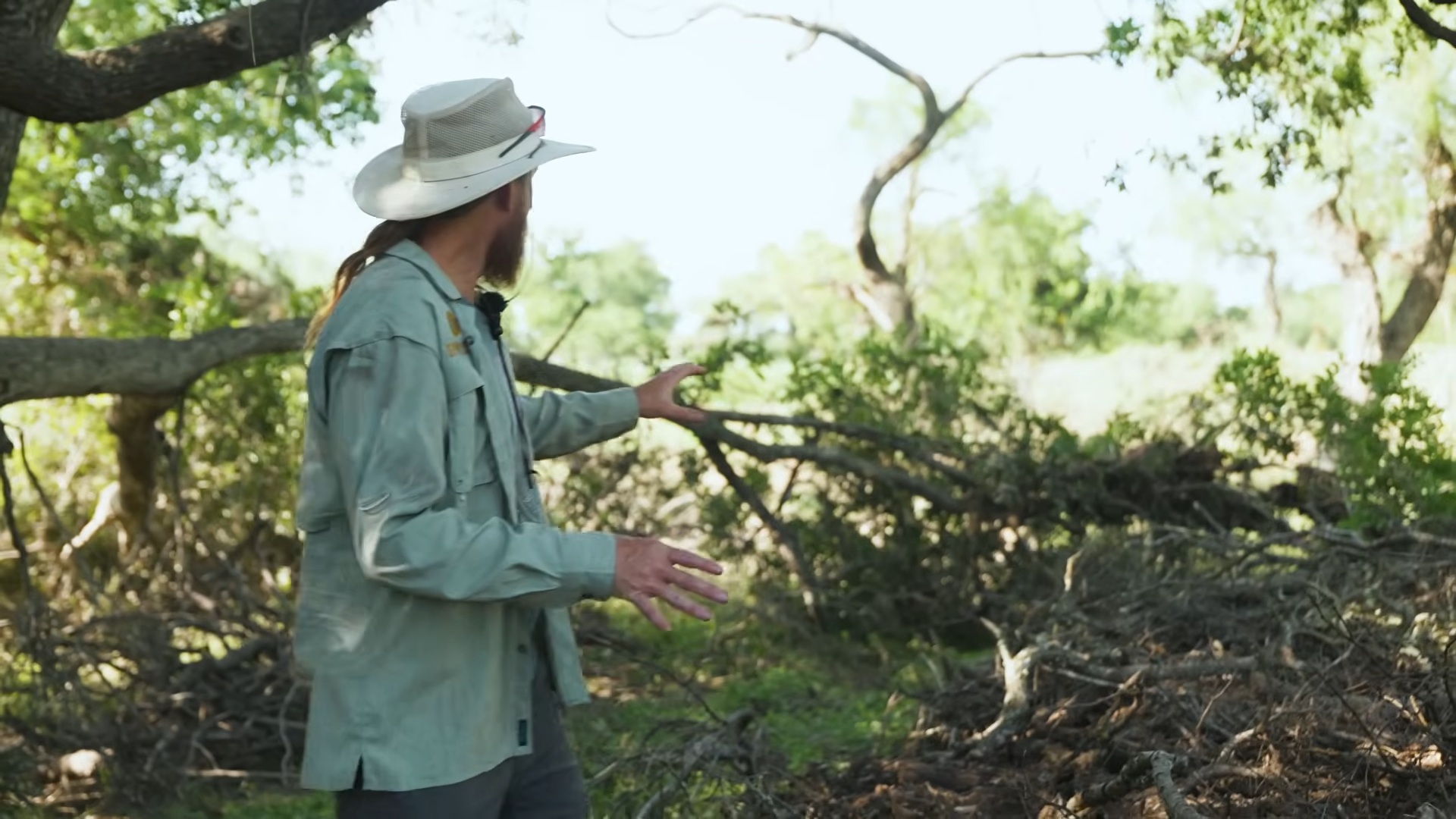
There’s a bigger opportunity hiding in that pattern. A burn scar or a flood-cut creek bank is the one moment you’ll ever rethink the whole system instead of patching back what just failed. Recovery money spent replanting the same vulnerability buys you the same disaster later. Recovery money spent redesigning how water moves across the land, slowing it and spreading it and sinking it, buys you land that handles the next flood better than it handled this one. That’s the thinking behind our approach to soil health and water health as one system.
In short:
- Document damage before you clear anything
- Check which declarations cover your county, since they unlock different programs
- Hit the live deadlines first (ECP by ~Sept 25, STAR Fund by Nov 30)
- Start the stewardship plan now if TRLI’s fall window could apply to you
- Ask your CPA about timber basis and cost-share taxability before filing
- Call your appraisal district proactively about your ag valuation
Quick Reference
| Situation | First move |
|---|---|
| Flood-damaged farm/ranch land, 24 ECP counties | County FSA office, before ~Sept 25 |
| Fences/barns/ag infrastructure, 29 declared counties | STAR Fund, before Nov 30 |
| Damaged buildings/improvements (15%+) | County appraisal district, 105 days from declaration |
| Trees lost to any disaster, last 10 years | TRLI, start the stewardship plan now |
| Wildfire damage to private forestland | County FSA, EFRP |
| Livestock/grazing losses | County FSA, ELAP / LFP (file by March 1, 2027) |
| Creek/riverbank damage | County judge or SWCD, sponsor an EWP request (60-day clock) |
| Recovery + long-term improvement | NRCS, EQIP (apply anytime) |
| Water quality / brush control | Local SWCD, free WQMP |
| Habitat/riparian restoration | TPWD, free biologist visit; ask about LIP |
| House damaged | FEMA Individual Assistance (the only thing it covers) |
Texas A&M Forest Service: (979) 458-6600 · FSA office locator: fsa.usda.gov/fsa-office-locator · TDA STAR Fund: 833-380-8282
Continue Learning
This article is part of our broader Central Texas Land Regeneration & Water Education Hub, where we explore how fire, water, soil, and land use interact across real landscapes.
Texas Landowner Disaster Recovery: Frequently Asked Questions
Does FEMA cover damage to ranches, pastures, or fences in Texas?
No. FEMA Individual Assistance covers your primary residence only. Farm, ranch, and land losses are handled through USDA programs at your county FSA office, the TDA STAR Fund, and Texas A&M Forest Service programs.
What grants are available for flood damage to Texas land in 2026?
As of August 2026, the Emergency Conservation Program is open in 24 Hill Country counties (up to 75% cost-share, sign-up closes around September 25), and the TDA STAR Fund is paying up to $8,000 per applicant in 29 declared counties through November 30. NRCS EQIP accepts applications year-round.
How much does the Texas Resilient Landscapes Initiative pay for reforestation?
TRLI reimburses site preparation and planting at set 2026 rates, for example $5.60 per seedling and $337.50 per acre for direct seeding, up to $80,000 per landowner per year. Damage from any natural disaster in the past 10 years qualifies, and a written stewardship plan is required.
Will losing trees or grazing to a fire or flood end my ag exemption?
Not automatically. Texas law only explicitly protects 1-d-1 valuation during drought. For fire and flood there’s no named statutory protection, so document the damage and contact your county appraisal district proactively about your intent to resume qualifying use.
Can prescribed burning happen during a county burn ban?
Yes, when conducted by a Certified & Insured Prescribed Burn Manager. State law exempts CPBM burns from county burn bans, and using one also limits the landowner’s liability.
Why do so many of these programs require a written plan?
Because the agencies fund outcomes, not just activity. A stewardship or conservation plan is how they verify the work fits the land, and it’s also the document that makes the money compound: one plan can unlock TRLI, EQIP, and your wildlife valuation at once.
Where We Fit
We design, build, and steward land systems in Central Texas, and the written plans these programs require are part of what we do but we don’t just stop at recovery we aim for permanent improvement to land and ecosystem function. If you’re recovering land you own and want a plan that unlocks the funding and leaves the land better positioned for the next flood or fire, reach out. We’ll help you navigate the options.