Last verified August 3, 2026. Payment rates and ranking dates change every year. Confirm current numbers with your county NRCS office before you plan around them.
Biochar gets plenty of attention right now, and most of it skips the practical question: who pays for it? Spreading char across real acreage is not cheap once you add the material, the freight, and the spreading itself.
Here is the part almost nobody mentions. The USDA will cover most of that bill. The Natural Resources Conservation Service runs a practice inside EQIP called Soil Carbon Amendment, practice code 336, and it reimburses farmers, ranchers, and forestland owners for applying biochar, compost, or a blend of the two. Texas offers it. Your county NRCS office is the front door.
This guide is a companion to our disaster recovery grants guide, where EQIP appears as the bridge from recovery back to improvement. This page goes deep on the one practice.
What the program actually is
EQIP, the Environmental Quality Incentives Program, is the NRCS’s main cost-share program for working lands. It is not a grant you receive up front. You sign a contract, do the work to spec, prove you did it, and get reimbursed.
Practice 336 pays for applying carbon amendments to soil. That covers biochar alone, compost alone, or blends, with payment scenarios tiered by the percentage of biochar in the mix (20, 40, 60, 80, or 100 percent). The payment rate is built from the typical cost of the whole job: the material, shipping, loading, spreading, and any field prep.
The practice applies to cropland, pasture, range, forest, associated agricultural land, and farmsteads. It came out of a temporary standard (code 808) that ran through 2023, and the permanent national standard has been in place since.
What biochar does, and what it doesn’t
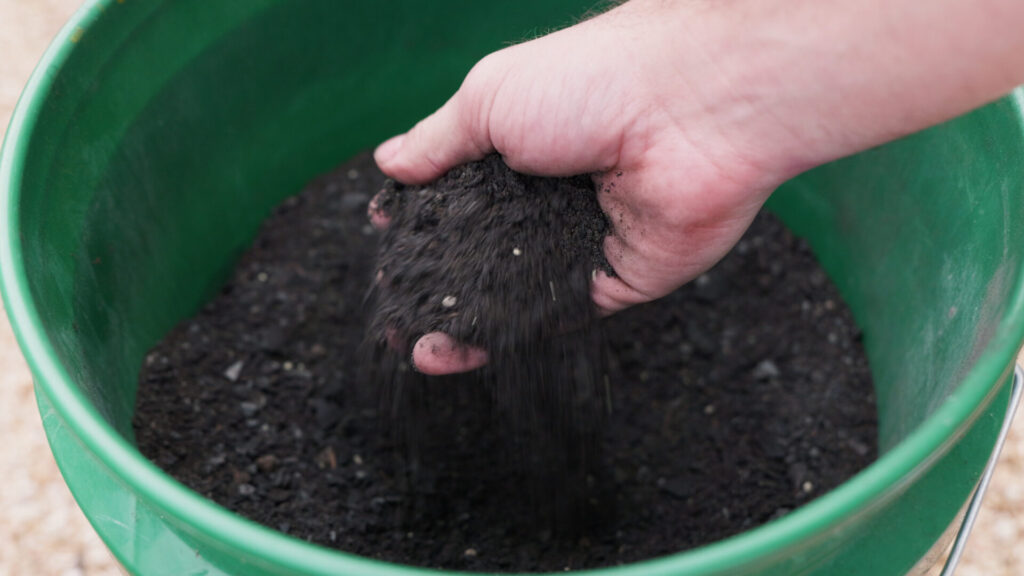
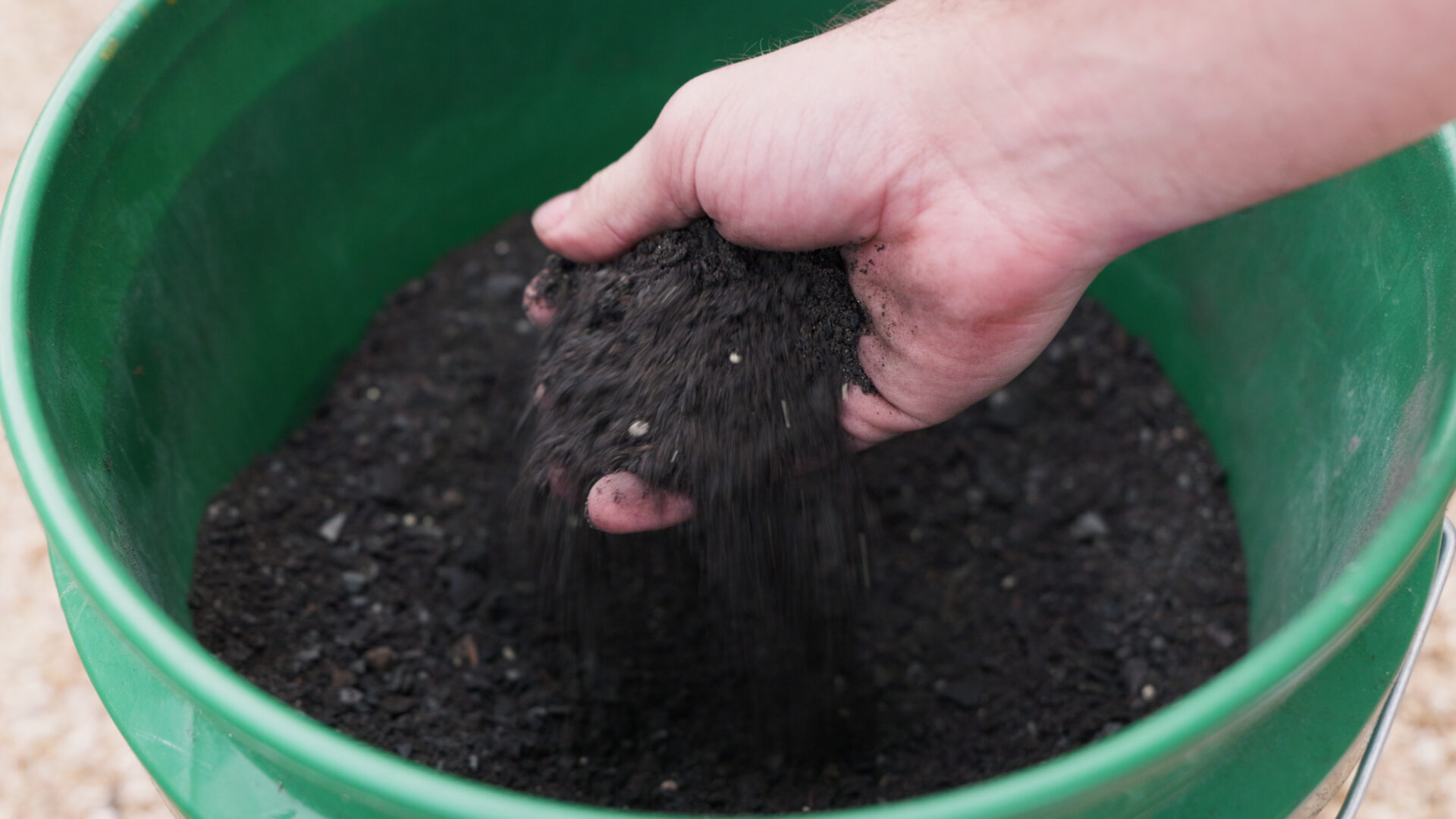
Biochar is organic material, usually wood, heated in a low-oxygen environment until what remains is a stable, porous carbon. Under a microscope it looks like a sponge. In soil, that porosity is the point. Char holds water and nutrients in the root zone, reduces nitrogen leaching, gives soil organisms habitat, and improves conditions for root growth.
One thing biochar is not: a fertilizer. It doesn’t feed plants directly. Its value comes from changing soil structure and giving the biology somewhere to live, which is why we apply it charged, mixed with compost, rather than straight.

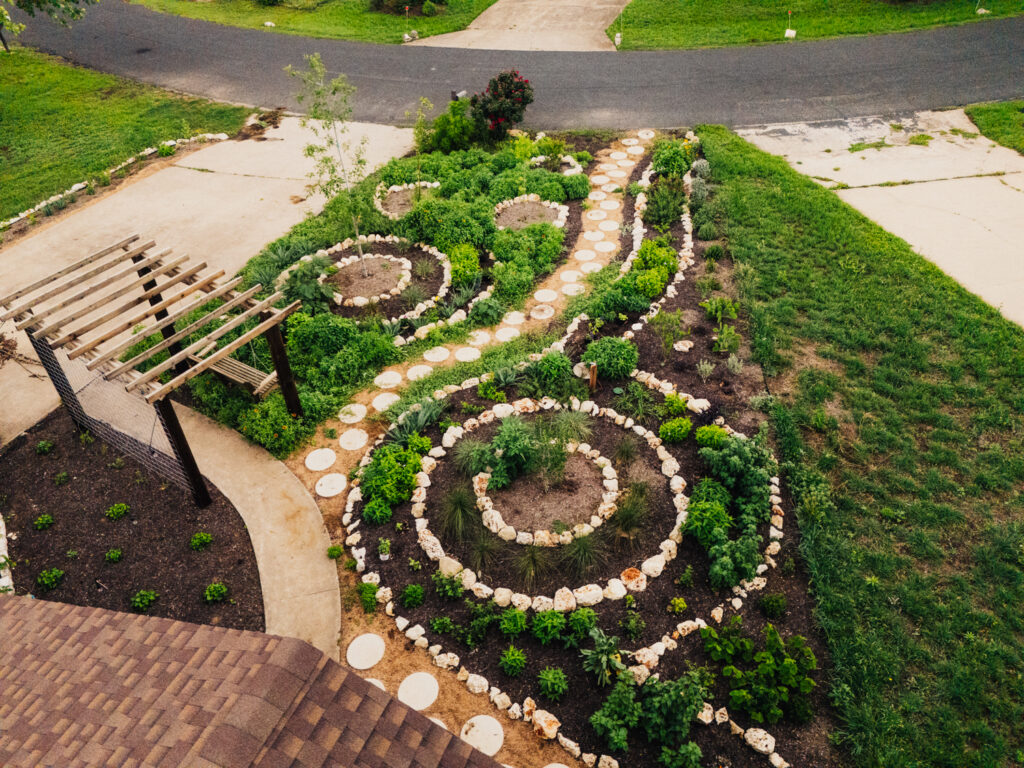
For Central Texas land, the water piece is the argument. Hill Country soils are shallow, rocky, and sit directly over limestone. When it rains, water either drops through the fractures or runs off in the storm event that brought it. Anything that raises the soil’s holding capacity extends how long a rain keeps working for you. There’s also a longer history here: Central Texas burned periodically for millennia, and those fires worked charcoal into the soil naturally. Biochar is the controlled, intentional version of a process this landscape already knows.
It is not a silver bullet, and we would not sell it as one. The feedstock, the processing temperature, how long it was held at that temperature, and the final particle size all decide what a given biochar is good for. A char made for a water filter behaves differently than one made for pasture. Match the product to your objective before you buy anything, and get a soil test first so you know what you are starting from.
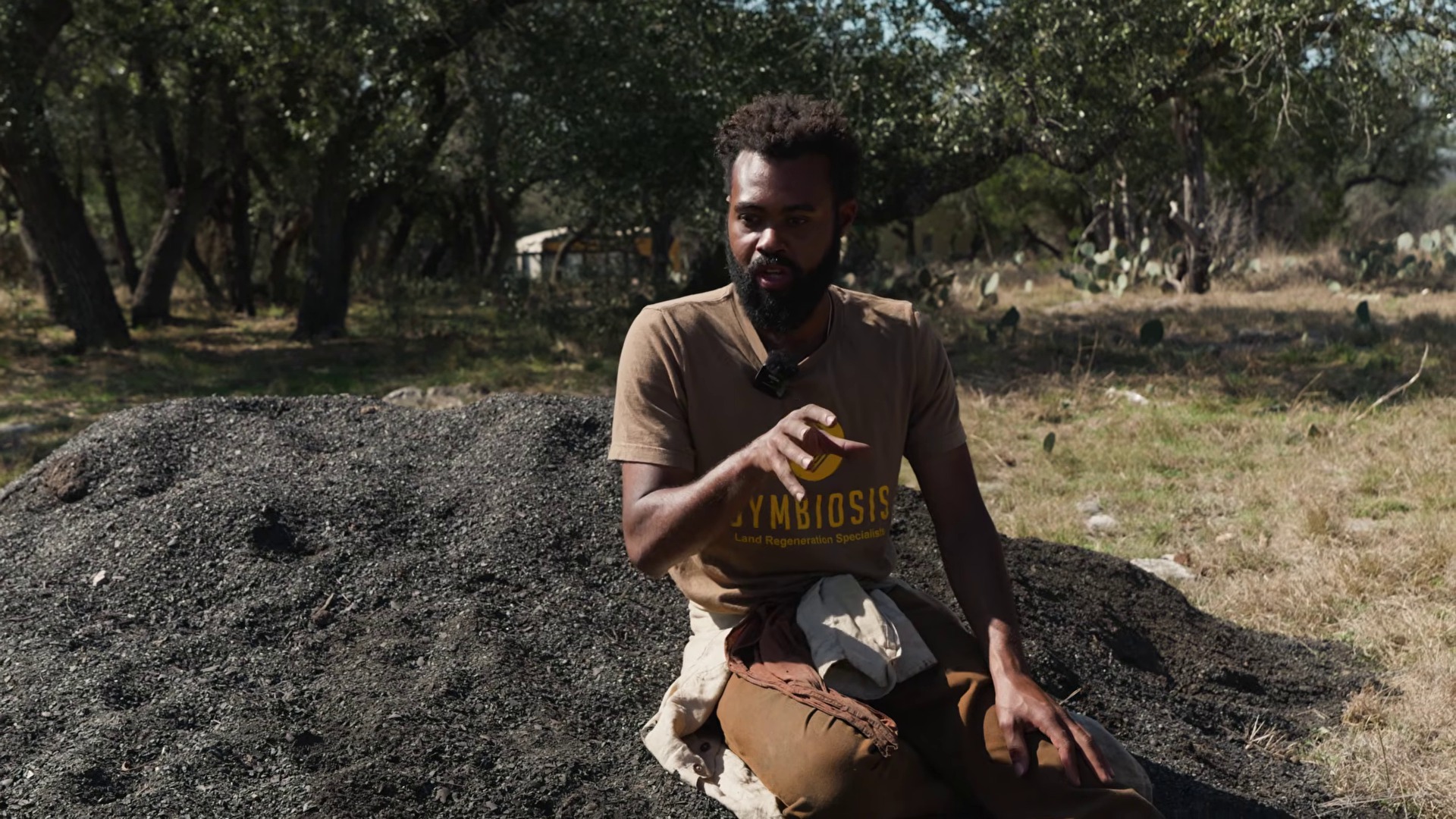
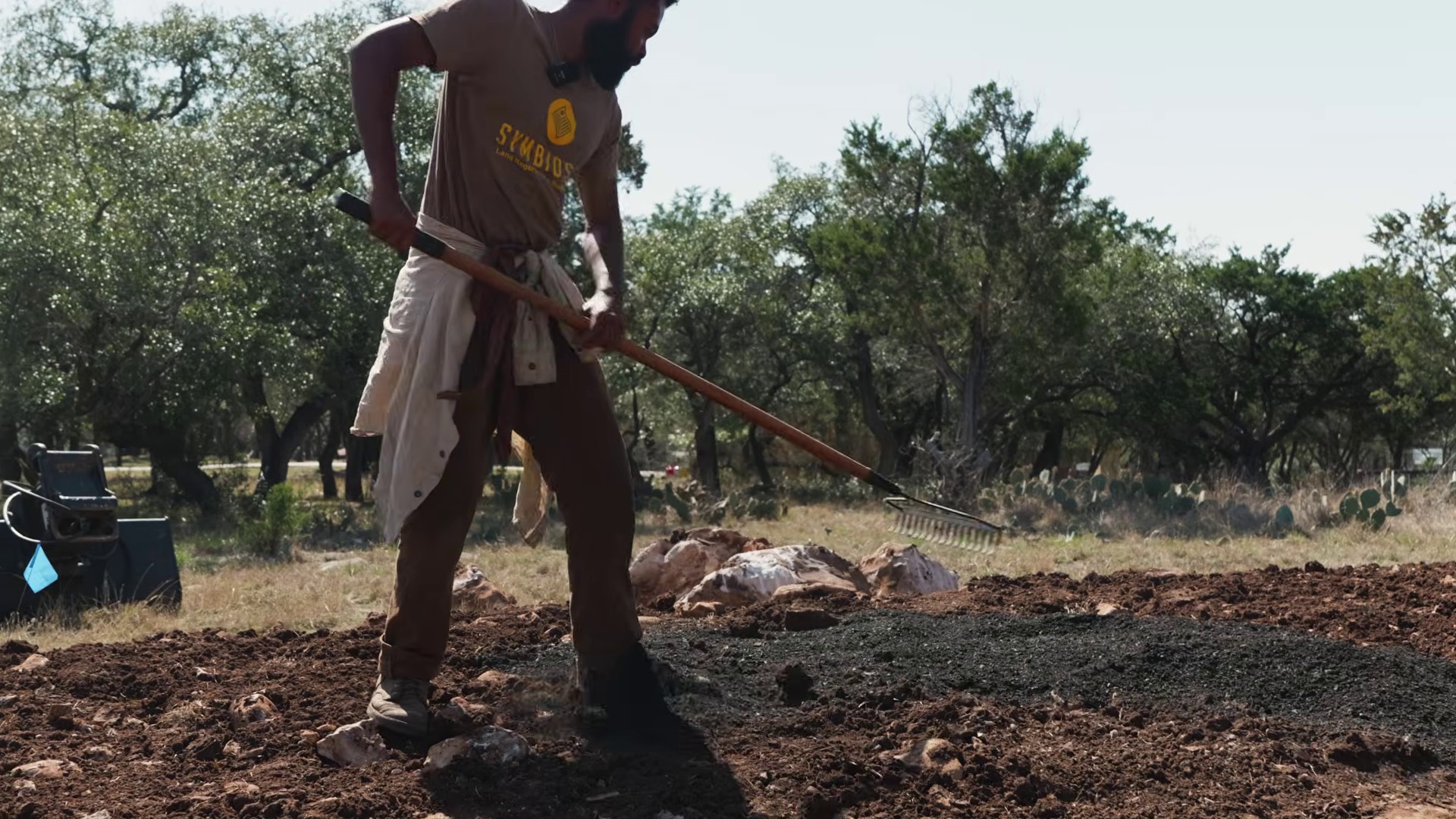
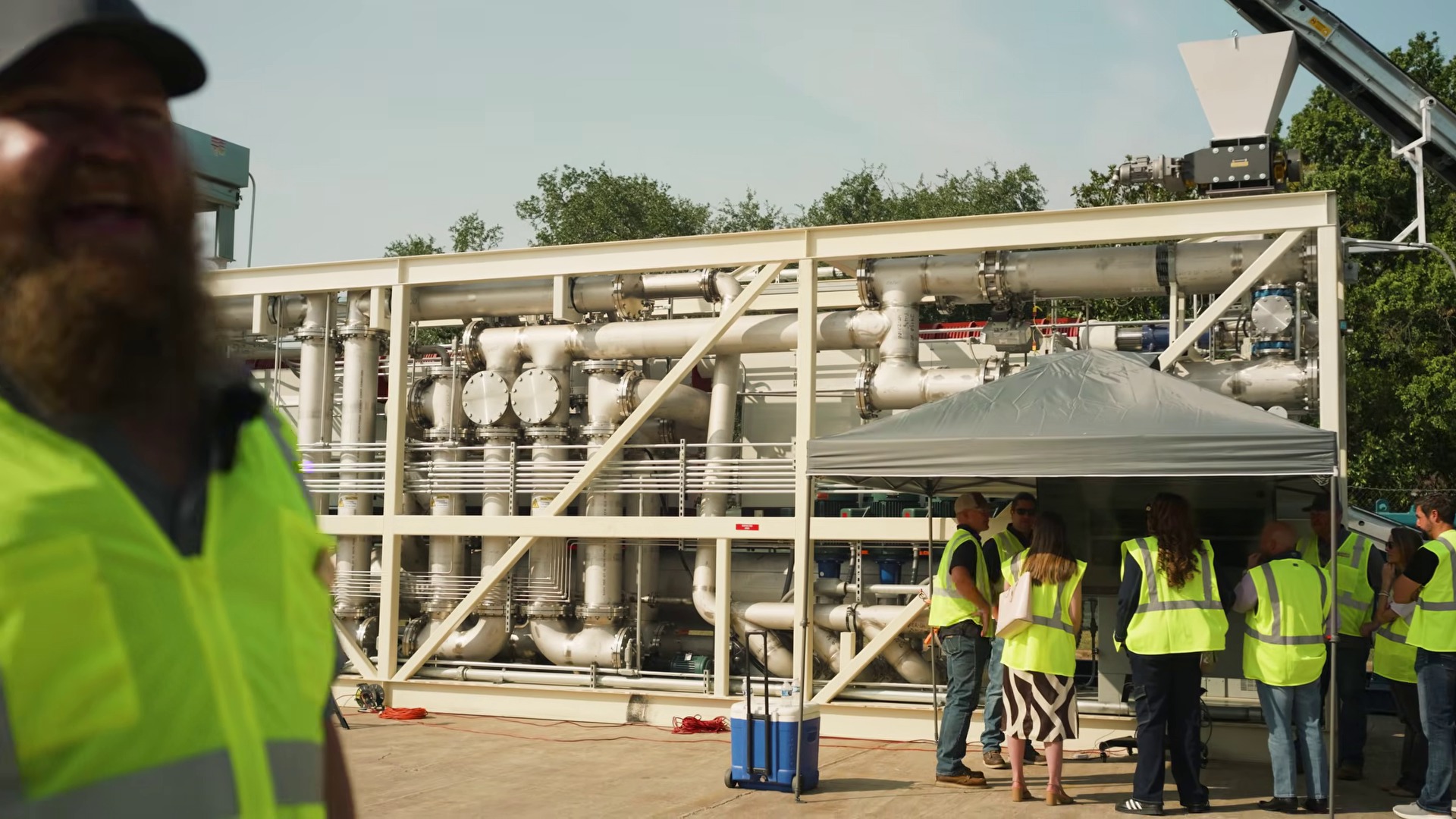
We made a full video on this: what biochar is, how it gets made, and how our crew applies it on a Hill Country planting site.
For the deeper science, pros and cons included, see our companion piece: What is Biochar and Does It Actually Work?
The money
| Question | Answer |
|---|---|
| How much is covered? | Around 75% of the typical cost for most producers |
| Historically underserved producers? | Around 90%, with the option of advance payment |
| What costs count? | Biochar, shipping, loading, spreading, field prep |
| How long can a contract run? | Up to 3 consecutive years of application |
| When do you get paid? | After certification, typically within 5 to 7 business days |
Certification is straightforward. You apply the material at the planned rate on the contracted acres, then meet your conservation planner with the purchase invoice and photos of the application. They check the work against the implementation requirements and sign off.
One honest gap: we are not quoting a Texas per-acre dollar figure here because NRCS resets each state’s rates every year. The current numbers live in the Texas payment schedule, and your district conservationist can quote the active scenarios in one phone call.
How much biochar you’d actually spread
The national standard sets no minimum or maximum rate. In practice, cost sets the ceiling and effectiveness sets the floor. Two common patterns:
- Light and repeated: 1 to 2 cubic yards per acre (roughly a quarter to half a ton), applied several years in a row.
- Heavy and once: 4 to 12 cubic yards per acre (roughly 1 to 3 tons) in a single application.
Your conservation plan sets the rate, the timing, and the purpose, with NRCS technical help built into the process.
Our field experience backs the lighter end of those numbers. Once biochar is raked into the topsoil it’s barely visible; a dusting is doing more than it looks like. Overdo it and the char can tie up nutrients, and you’ll see the cost in the first year’s growth before things even out. Adding a little each year as you care for the system beats one heavy application, and it happens to be exactly the pattern the 3-year contract structure supports.

Who qualifies
The requirements are the standard EQIP set, verified through NRCS and the Farm Service Agency:
- You control the land (own, rent, or lease) for the length of the contract.
- Your adjusted gross income is under $900,000.
- You are in compliance with highly erodible land and wetland conservation rules.
- The application addresses an identified resource concern on eligible land. Improving soil condition is the concern this practice exists for, so that bar is lower than it sounds.
The product has to pass a lab test
The 336 standard requires the biochar or compost to be tested, with toxic metals under set thresholds and a handful of other parameters reported. Texas can layer stricter criteria on top through Section IV of its Field Office Technical Guide, so ask your NRCS office for the state implementation requirements before you order material.
The practical takeaway: buy from a supplier who can hand you a lab analysis with the product. The International Biochar Initiative certifies biochar against contaminant standards, and that certification is the shorthand to ask for. The US Biochar Initiative keeps a national supplier list, and the industry is growing fast enough that a local search is worth doing too.
For our own projects we source from LoCo, who make biochar in Houston from waste pallet wood that would otherwise go to landfill, and who publish third-party lab reports on everything they produce. We toured their bioreactor in the video above. A supplier who volunteers their lab data is solving your NRCS paperwork problem for you.

If you’re clearing cedar anyway
Here is the angle that fits Central Texas better than anywhere. There is a separate enhancement in the Conservation Stewardship Program, E384A, that pays for producing biochar from woody residue in an open kiln on your own land. CSP is a bigger commitment than a single EQIP practice, since it covers your whole operation. But if brush management already has you feeding burn piles every winter, the material for char is sitting in front of you.
We have written before about what to do with Ashe juniper. Turning cleared cedar into a soil amendment instead of smoke is the kind of loop-closing that makes a place work better every year.
How to apply
- Call the NRCS District Conservationist in the county where your operation is headquartered, or walk into the USDA Service Center. This one call starts everything.
- Get a soil test on the target acres that includes pH and organic matter, and be ready to say what you want the biochar to do.
- Work with NRCS staff to build a conservation plan. The plan is the gateway; no plan, no contract.
- Your application gets scored against others in the state at periodic ranking dates. The most recent national batching deadline was January 15, 2026. Ask your office for the next one, and get your paperwork in well ahead of it.
- If selected, you sign a contract that sets the rate, acres, and years. Then you apply, document, certify, and get reimbursed.
Applications are accepted year-round, and the whole process runs on months, not weeks. Starting early is the difference between making this funding cycle and waiting for the next one.
The plan is the real gateway
Every serious funding program in this space asks for the same thing before it writes a check: a plan. EQIP wants a conservation plan. TRLI wants a stewardship plan. The state water programs want a water quality management plan. The landowners who get funded are the ones who have that thinking done before the window opens.
That planning is the work we do. If you want biochar, brush management, or water infrastructure on your land and you want cost-share behind it, talk to us. We will walk the land with you first.