Home / Land Management Practices / Applying Wildfire Science to Land Stewardship in Central Texas

Applying Wildfire Science to Land Stewardship in Central Texas

Companion article to Episode 1 of our wildfire series with the Austin Fire Department Wildfire Division

Scope note: This article focuses on wildfire risk and mitigation across the land itself, including vegetation structure, fuel continuity, and active management. A future episode and companion blog will focus specifically on structures and homes in relationship to the surrounding land, including defensible space, ember exposure, and building considerations.

Wildfire risk in Central Texas is often discussed in broad, abstract terms. Drought, heat, wind, and fuel loads are real, but they only become meaningful when translated into decisions on the ground. This companion article focuses on how wildfire science shows up in day‑to‑day land stewardship, using a ten‑acre Hill Country property walkthrough with wildfire mitigation specialists from the Austin Fire Department as a practical case study.

Rather than restating the ecological history of fire in the Hill Country, this article explores how those concepts apply to real properties, real constraints, and real management choices.

Wildfire Risk and Land Stewardship in Central Texas

Wildfire Risk and Land Management in Practice

Fire Risk Is About Ignition and Continuity

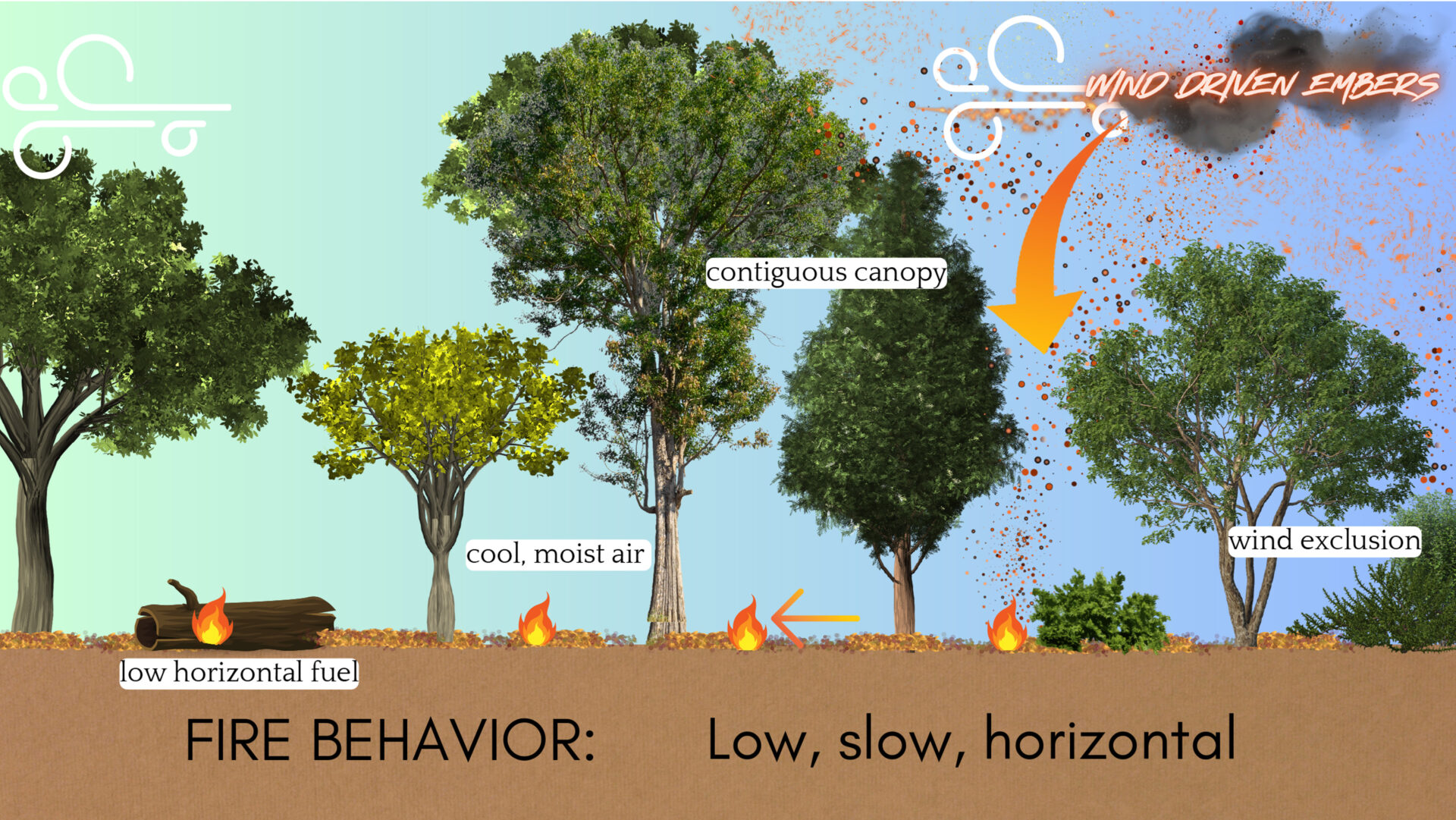
Diagram showing wildfire behavior on managed Central Texas land with low horizontal fuels, contiguous canopy, reduced ladder fuels, and slower ground-level fire spread.

One of the most important takeaways from the field visit is that wildfire risk is not just about how much vegetation exists on a property. It is about where ignition is likely to occur and how easily fire can move once it starts.

Wildfire specialists consistently emphasize that most structure losses are caused by airborne embers, not walls of flame. Embers can travel long distances ahead of a fire front, landing in receptive fuels and igniting new fires. This means that landowners need to think beyond their fence line and consider what exists within ember‑casting distance of their homes and infrastructure.

For a practical overview of wildfire behavior in the Hill Country, see our foundational article and resources from ATX Wildfire, which outline how ignition, weather, and fuel structure interact across Central Texas landscapes.

Fire in the Texas Hill Country

Grass, Grazing, and Mowing

Grass is often viewed as either harmless or inherently dangerous, depending on who you ask. In practice, grass behavior depends on moisture, height, continuity, and timing.

In the video walkthrough, wildfire specialists discuss how stockpiled grass, common in regenerative grazing systems, is not automatically a fire hazard. Livestock are not ignition sources. The risk increases when tall, dry grass is placed adjacent to predictable ignition points such as roads, welding areas, fence construction, or neighboring development.

The application here is targeted management rather than blanket mowing. Strategic reduction of grass near ignition sources, while allowing managed forage elsewhere, reduces wildfire risk without undermining soil cover or forage value.

Brush Piles, Brush Berms, and Reality

Brush piles are a common feature on working properties. They are also commonly misunderstood.

A loosely piled, airy brush pile rich in fine fuels can act as a concentrated ignition jackpot. However, the video highlights that placement, compaction, and active management matter more than the mere presence of brush.

On this property, brush was used intentionally to create berms and erosion control features in rocky drainages. Because these features were compacted, located away from structures, and surrounded by non‑combustible substrate, wildfire specialists did not view them as a major concern.

The applied lesson is simple. Know what you have, know why it exists, and manage it over time. Fire risk increases when material is forgotten, unmanaged, or placed where ember ignition would have cascading consequences.

Ladder Fuels and Canopy Protection

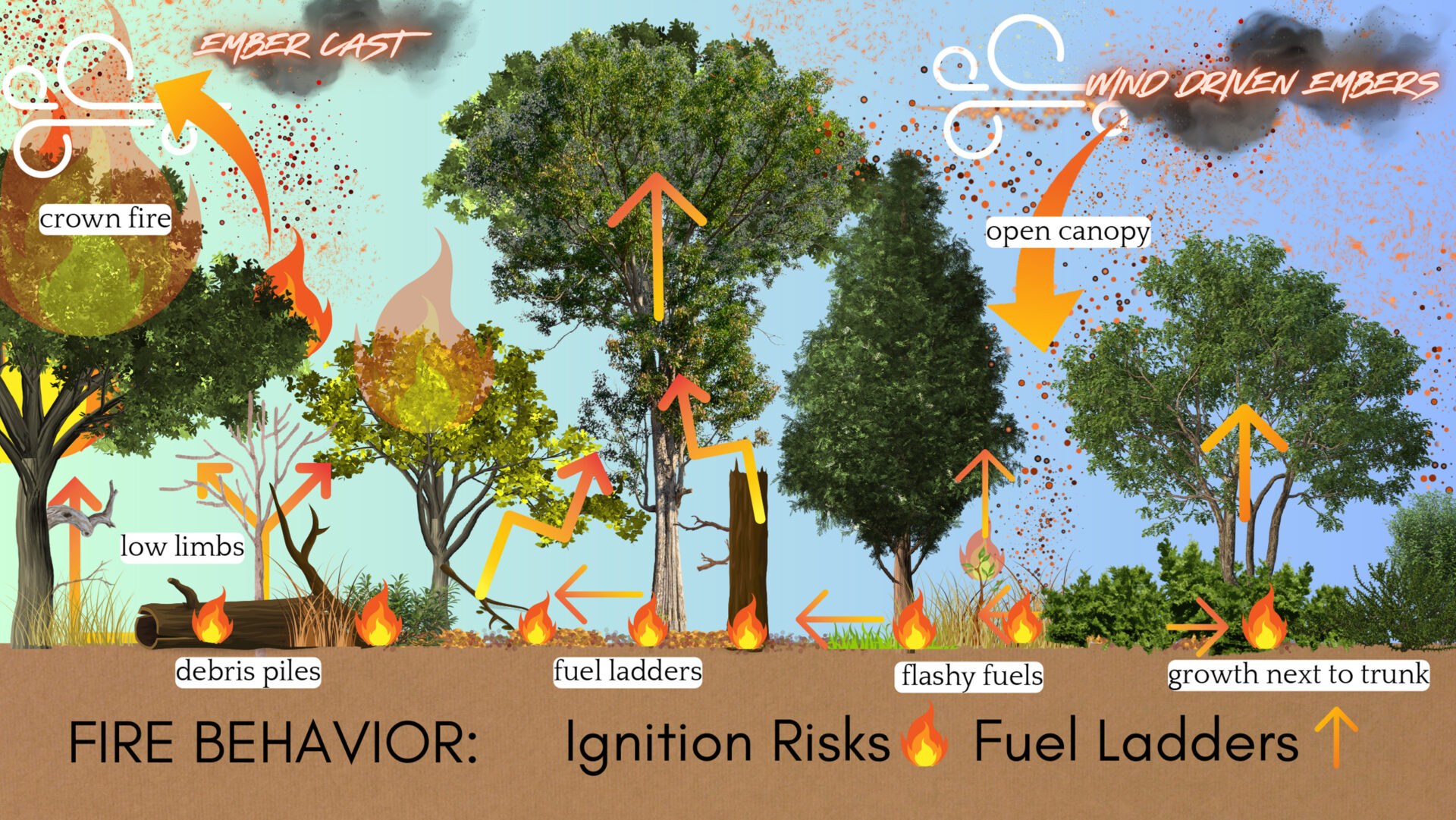
Diagram illustrating wildfire ignition risks on unmanaged Central Texas land, including fuel ladders, debris piles, crown fire potential, and wind-driven ember cast.

Fire on the ground and fire in the canopy behave very differently. Low‑intensity fire moving through grasses or leaf litter can be manageable. Fire that climbs into the canopy is far more destructive.

In several examples from the property walkthrough, broken juniper limbs, accumulated leaf litter, and connected vegetation created potential ladder fuels linking the ground to mature oaks. These connections often develop slowly and go unnoticed.

Applied wildfire mitigation here looks less like aggressive clearing and more like selective disconnection. Removing suspended dead material, breaking contact points, and monitoring seasonal drying patterns can dramatically reduce the chance of fire transitioning upward.

This approach aligns with guidance from ATX Wildfire, which emphasizes reducing vertical fuel continuity rather than attempting to eliminate all vegetation.

Fire in the Texas Hill Country

Monitoring Beats One‑Time Solutions

A recurring theme from wildfire professionals is that risk is never static. Conditions change with weather, season, and land use.

Features that are acceptable during wet periods may become concerns during prolonged drought. Properties that are actively lived on benefit from frequent observation. Problems are noticed early, fuels are adjusted, and situational awareness stays high.

This reinforces an important mindset shift. Wildfire mitigation is not a checklist. It is an ongoing process of awareness, adjustment, and prioritization.

What This Means for Central Texas Landowners

Wildfire science does not demand fear‑based clearing or ecological simplification. It asks landowners to:

  • Understand where ignition is most likely

  • Interrupt fuel continuity strategically

  • Protect canopy trees by managing ladder fuels

  • Match vegetation management to seasonal risk

  • Balance wildfire mitigation with soil and water health goals

For landowners seeking deeper guidance, Austin FD ATX Wildfire offers consultations and region‑specific education tailored to Central Texas conditions.

Fire in the Texas Hill Country

Continue Learning

This article is part of our broader Central Texas Land Regeneration & Water Education Hub, where we explore how fire, water, soil, and land use interact across real landscapes.

Central Texas Land Regeneration & Water Health Education

Watch Episode 1 of our wildfire series for the full field walkthrough, and subscribe for Episode 2, which focuses specifically on wildfire risk around homes and structures.

Wildfire Risk in Central Texas: Frequently Asked Questions

What is the biggest wildfire risk for rural landowners in Central Texas?

For most properties, the greatest risk comes from airborne embers rather than direct flame contact. Embers can travel long distances and ignite receptive fuels, especially where vegetation continuity allows fire to spread.

Is grass always a wildfire hazard?

Grass becomes a wildfire concern when it is dry, continuous, and located near likely ignition sources. Managed grass, grazing, and seasonal moisture can significantly reduce fire behavior and spread.

Are brush piles always dangerous?

Brush piles can increase wildfire risk if they are loose, airy, rich in fine fuels, and placed near structures. Compacted, well-managed brush piles or brush berms located away from buildings may present minimal risk when actively monitored.

What are ladder fuels and why do they matter?

Ladder fuels allow fire to move from the ground into the canopy. Reducing vertical fuel continuity by removing suspended dead material and breaking contact points helps prevent high-severity canopy fires.

Can wildfire risk be eliminated?

Wildfire risk can never be reduced to zero. The goal of land management is to lower risk as much as possible through awareness, fuel management, and ongoing monitoring.

Will the next episode cover homes and buildings?

Yes. A future video episode and companion blog will focus specifically on how structures interact with wildfire risk, including defensible space, building materials, and ember intrusion.

Related Educational Context

For foundational context across land regeneration and water health, visit our Central Texas Land Regeneration Education hub.

Applying Wildfire Science to Land Stewardship in Central Texas

Home / Applying Wildfire Science to Land Stewardship in Central Texas Companion article to Episode…
Overgrazing in the Texas Hill Country

Home / Overgrazing in the Texas Hill Country Why Timing, Movement, and Recovery Matter More…

Karst Hydrology and Water Movement in the Texas Hill Country

Home / Karst Hydrology and Water Movement in the Texas Hill Country How Fractured Limestone…

Scale and Fragmentation in Central Texas Land and Water Systems

Home / Scale, Fragmentation, and Why Good Practices Don’t Always Scale Why Scale and Fragmentation…

Adaptive Management in Central Texas: Monitoring, Learning, and Recovery

Home / Monitoring, Learning, and Adaptive Management in Central Texas How to Make Decisions in…

Urbanization, Permeability, and Water Movement in Central Texas

Home / Urbanization, Permeability, and Water Movement in Central Texas How Development Changes Timing, Storage,…