Soil Health as the Engine of Water Health in Central Texas

In the Texas Hill Country, water outcomes are shaped long before rainfall ever reaches a creek, pond, or river. The condition of the soil surface and the living systems within it determine whether rain becomes infiltration or runoff.

When soils function well, rain is absorbed, slowed, stored, and shared with plants and microbes. When soils are degraded, rain sheds quickly, concentrates into destructive flow paths, and leaves the landscape drier after every storm.

What We Mean by Water Health

When we refer to water health, we are not only talking about water quality in streams or rivers. Water health also includes how water moves through the landscape before it ever reaches a channel.

In healthy systems, rainfall infiltrates into soil, is stored temporarily in the ground, supports plant growth, and slowly contributes to baseflow in creeks and springs. In degraded systems, rainfall runs off quickly, concentrates into erosive flows, carries sediment downstream, and leaves the land drier after each storm.

Soil condition is one of the strongest determinants of which of these outcomes occurs.

Soil Is Not Dirt

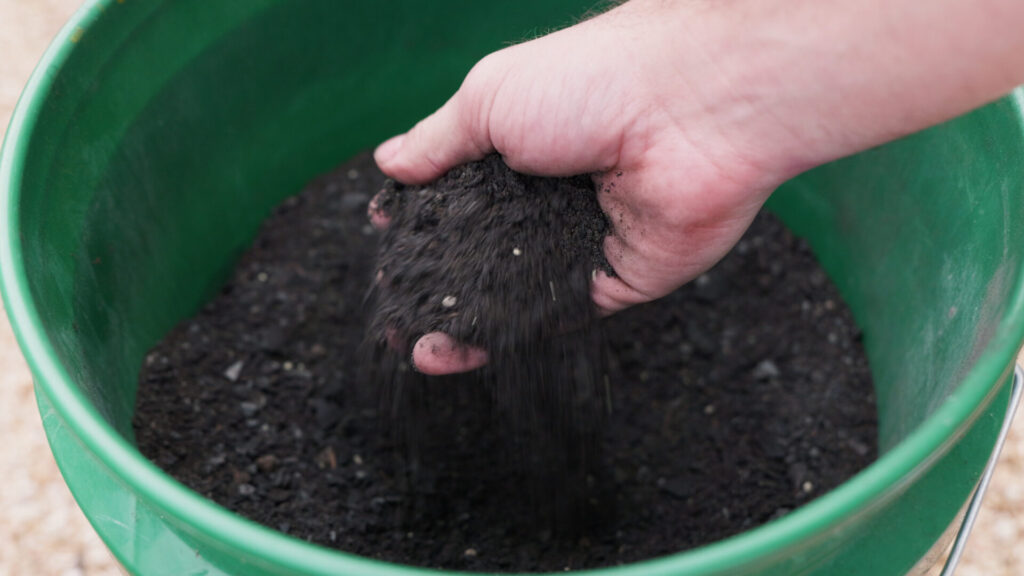
Soil is a living structure. It is not simply a pile of mineral particles. A healthy soil behaves more like a sponge and a filter combined. It is held together by roots, fungi, organic matter, and stable aggregates that create pore space.

In Central Texas, soil depth can be limited, but soil function still determines water outcomes. Healthy soils tend to:

  • Absorb rainfall by maintaining pore space and a stable surface structure

  • Resist erosion by holding together under high-intensity storms

  • Store carbon and nutrients in organic matter and stable aggregates

  • Support plant recovery by maintaining moisture and enabling deep rooting

Degraded soils tend to do the opposite. They shed water, lose structure, and amplify extremes. The result is a landscape that experiences both flooding and drought more severely, sometimes within the same season.

Thin Soils Can Still Function

Hill Country soils are often shallow, rocky, and highly variable. That does not automatically mean they are fragile or unproductive. In many locations, the limiting factor is not depth alone. It is whether the soil is functioning as a stable, living system.

Even shallow soils can perform well when they have:

  • Aggregation that creates pore space and resists crusting

  • Organic matter that improves moisture holding capacity and nutrient cycling

  • Root density that stabilizes the surface and feeds soil biology

  • Biological activity that builds structure and supports infiltration

Soil health is not measured by appearance alone. It is measured by behavior during rainfall. Two soils can look similar when dry but respond very differently when a storm hits.

How to Read Soil Function During Rainfall

Signs of healthy function

  • Rain soaks in quickly with minimal surface pooling

  • Water spreads out rather than forming concentrated channels

  • Soil remains crumbly and stable after storms, not sealed or crusted

  • Vegetation recovers quickly after heat or dry periods

Signs of degraded function

  • Water beads or runs off even in moderate rainfall

  • Surface crust forms and persists after storms

  • Rills and small channels appear, especially on slopes or bare areas

  • Plant growth is patchy and stress response is rapid

A Simple Field Checklist After a Rain

This checklist can be used immediately following a rainfall event to assess soil and water function. No tools are required. Repeating observations over time is more important than any single measurement.

Look for signs of healthy function:

  • Rainwater infiltrated with little surface pooling

  • Water spread across the surface rather than forming channels

  • Soil surface remained intact, not sealed or crusted

  • Plant leaves and stems remained upright rather than matted

  • No visible sediment movement downslope

Look for warning signs of degradation:

  • Water beading or running off quickly

  • Puddles persisting long after rainfall ends

  • Surface crusts or hardening once soil dries

  • Rills, small channels, or sediment fans forming

  • Muddy water leaving the site

If most observations fall in the second category, soil function is likely limiting water outcomes, even if vegetation appears adequate at a glance.

Soil Loss Is a Hydrologic Problem

Erosion is not only a soil issue. It is a water issue.

When topsoil erodes, the most biologically active layer of the landscape is removed. That loss reduces infiltration capacity and increases runoff. Over time, this creates a feedback loop:

  1. Less topsoil means less infiltration

  2. Less infiltration means more runoff and stronger erosion

  3. More runoff concentrates flow, carving channels and drying uplands

  4. Drier soils and weaker plant cover make the next storm more destructive

Restoring soil function is foundational to:

  • Flood mitigation by increasing infiltration and reducing rapid runoff

  • Drought resilience by improving moisture storage and plant access

Long-term regeneration by stabilizing soil and supporting recovery

Soil Health Metrics

Soil health is best evaluated using multiple indicators observed consistently over time. No single metric tells the full story.

Key metrics to track

  • Ground cover percentage to reduce erosion and evaporation

  • Infiltration rate to understand runoff versus absorption

  • Aggregate stability to assess structural resilience

  • Compaction and root penetration to evaluate movement of roots and water

  • Organic matter levels as a long-term indicator of soil building

  • Biological indicators such as roots, fungi, and soil organisms

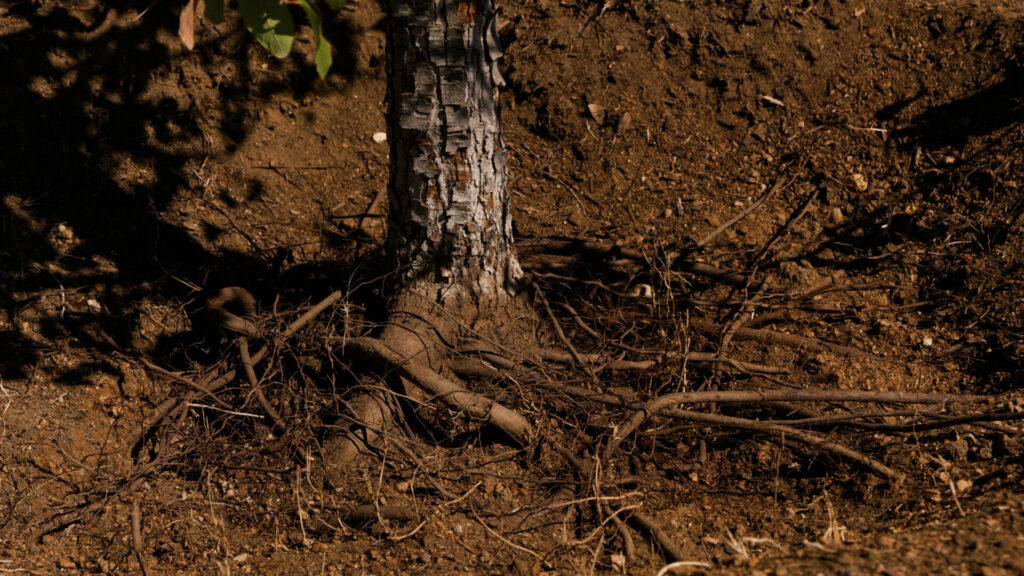
  • Erosion indicators including rills, sediment movement, and exposed roots

Trends matter more than absolute values. Repeated measurements under similar conditions provide the most useful insight.

Myths vs Reality

Myth: Hill Country soils are too thin to improve.
Reality: Function often matters more than depth. Improvements in aggregation, cover, and biology can significantly improve infiltration and resilience even in shallow soils.

Myth: Flooding is mainly caused by rain intensity.
Reality: Storm intensity matters, but soil condition strongly influences whether rainfall becomes infiltration or runoff.

Myth: Compost or fertilizer alone fixes soil health.
Reality: Inputs can help, but without cover, roots, and biological activity, benefits are often short-lived.

Myth: Bare ground is unavoidable.
Reality: Persistent bare soil usually indicates disturbance exceeding recovery and increases erosion and runoff risk.

Myth: Soil health is about how soil looks.
Reality: Soil health is about how soil behaves, especially during and after rainfall.

A Note on Variability and Context

Soil and water responses vary based on soil type, slope, geology, vegetation, climate, and land use history. No single practice, metric, or observation applies universally.

Soil health should be evaluated across multiple locations on a property, during different seasons, and after different rainfall events. Patterns over time are more meaningful than isolated observations.

Related Educational Context

For foundational context across land regeneration and water health, visit our Central Texas Land Regeneration Education hub.