
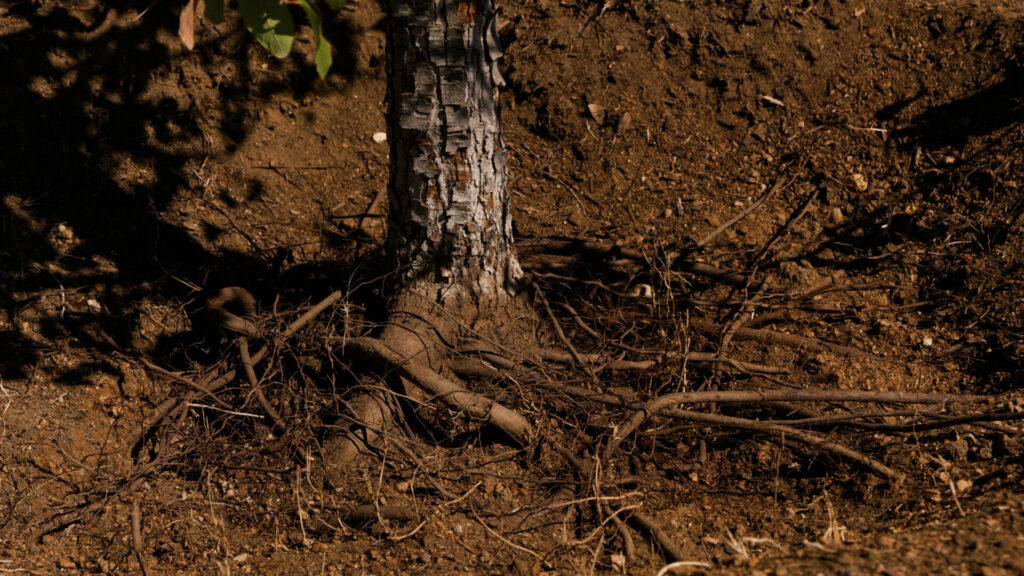
Home / Soil & Ecology / Root Dysfunction in Central Texas Trees: How to Diagnose, Fix, and Restore Tree Health

Root Dysfunction in Central Texas Trees

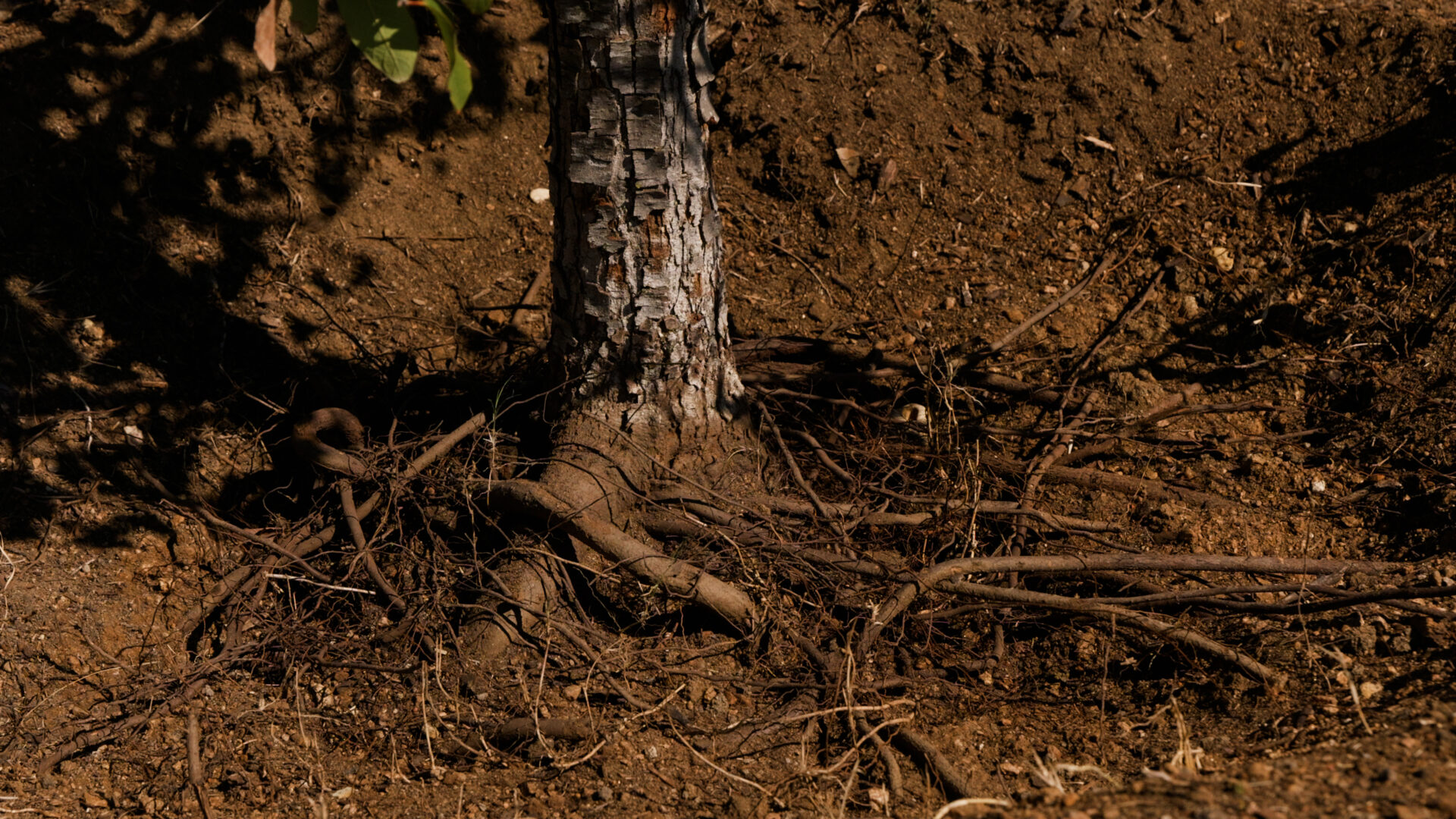
Exposed girdling roots wrapping around trunk of Central Texas landscape tree
Girdling roots encircling the trunk can restrict vascular flow and lead to long-term decline.

Understanding the Hidden Cause of Tree Stress and Landscape Decline

In Central Texas, declining tree health is often blamed on drought, pests, or heat stress. In many cases, the true cause is hidden below the soil surface.

Central Texas tree root dysfunction is one of the most common and least understood problems affecting planted landscape trees. When roots develop improperly or become buried, trees struggle to transport water, oxygen, and nutrients efficiently. Over time, this leads to canopy thinning, dieback, reduced growth, and shortened lifespan.

Understanding and correcting root dysfunction not only restores individual trees but also improves soil structure, water infiltration, and long-term landscape resilience.

What Is Root Dysfunction?

Root dysfunction occurs when a tree’s structural roots develop in ways that restrict natural growth and biological function.

The Most Common Causes in Central Texas Landscapes

1. Buried Root Flare
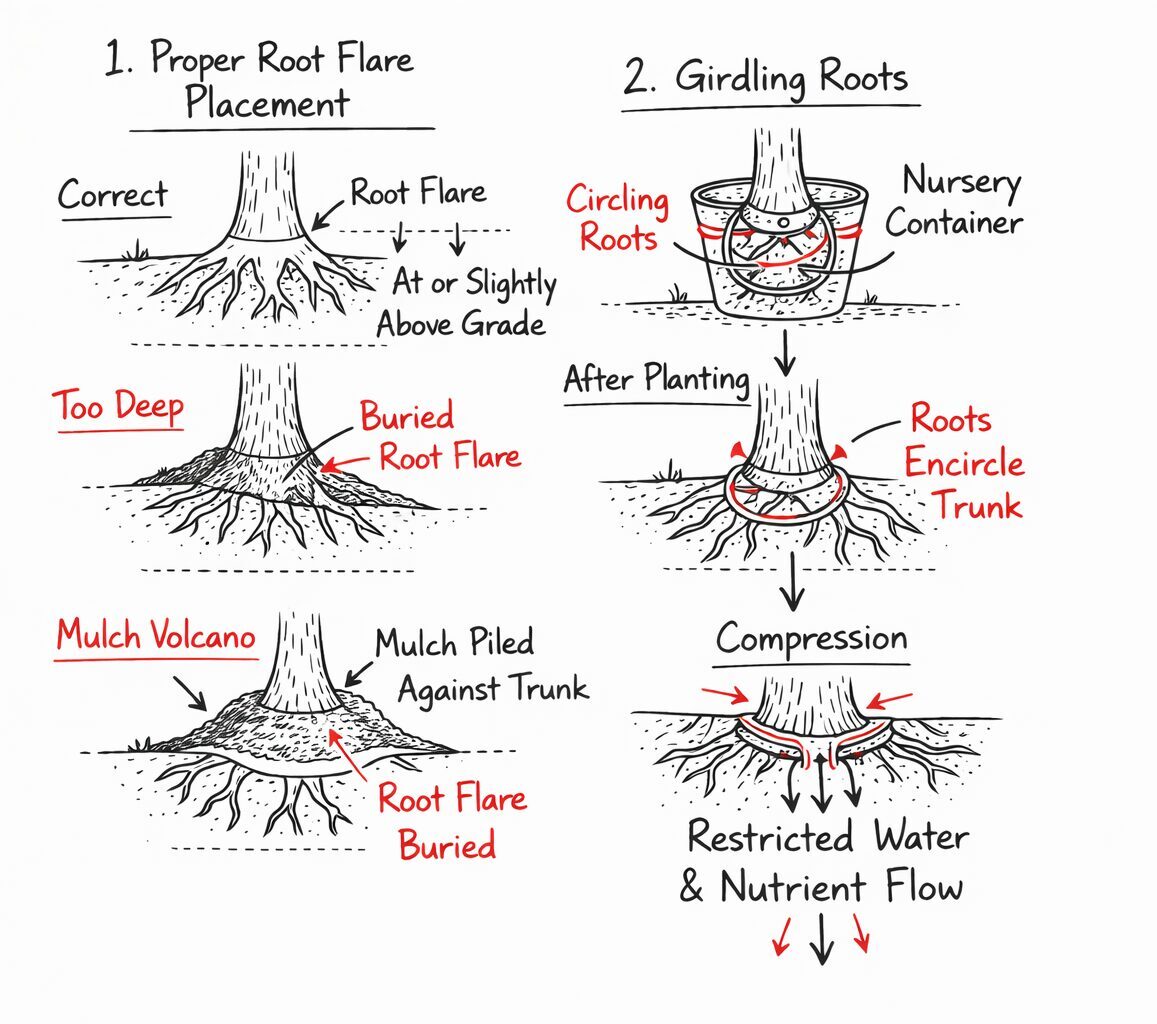
The root flare is the visible transition where the trunk widens into major roots. This area should sit at or slightly above grade. When soil or mulch buries it, moisture accumulates against bark tissue and disrupts gas exchange.

The International Society of Arboriculture notes that improper planting depth is a leading cause of premature tree decline.

2. Excessive Mulching
Repeated mulch applications can slowly raise soil grade around the trunk. Mulch should never touch bark.

3. Girdling Roots from Nursery Containers
Trees grown in containers frequently develop circling roots. If not corrected during planting, those roots continue wrapping around the trunk underground, eventually restricting vascular flow.

Texas A&M AgriLife Extension identifies circling and girdling roots as a major structural defect in urban trees.

Hand-drawn diagram showing correct root flare placement, mulch volcano, and girdling root compression

Why Root Dysfunction Matters for Tree and Soil Health

Healthy trees operate as biological pumps. Roots absorb water and oxygen from soil. Leaves convert sunlight into carbohydrates. The cambium layer transports sugars downward and water upward.

When the trunk base is buried:

  • Oxygen diffusion decreases

  • Fungal pathogens thrive

  • Bark begins to decay

  • Energy transport becomes inefficient

Reduced energy transport leads to reduced canopy growth.

This dysfunction also impacts the surrounding soil ecosystem. Healthy roots feed microbial communities and improve soil aggregation. Dysfunctional roots reduce infiltration and increase runoff, directly affecting watershed health.

For deeper context on how soil structure drives water outcomes in our region, see:

Soil Health as the Engine of Water Health in Central Texas

The USDA Natural Resources Conservation Service further explains how soil structure influences infiltration and runoff.

Signs of Central Texas Tree Root Dysfunction

Look for these early indicators:

  • No visible root flare at soil level

  • Soil or mulch touching the trunk

  • Turfgrass growing directly against bark

  • Cracked or decaying bark near ground line

  • Thin upper canopy with fuller lower growth

Grass growing up to the trunk often signals that soil has accumulated above the natural root zone.

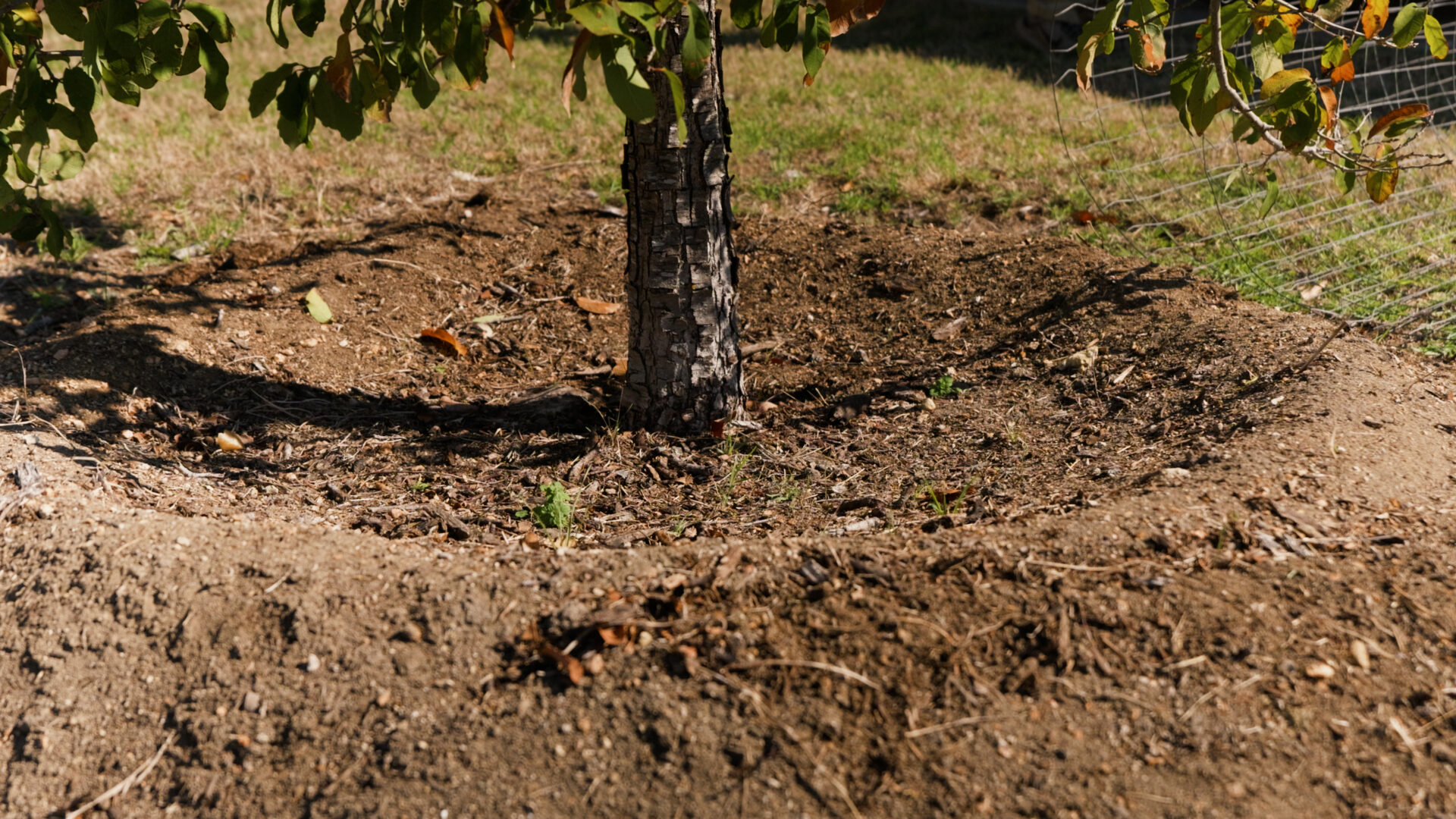
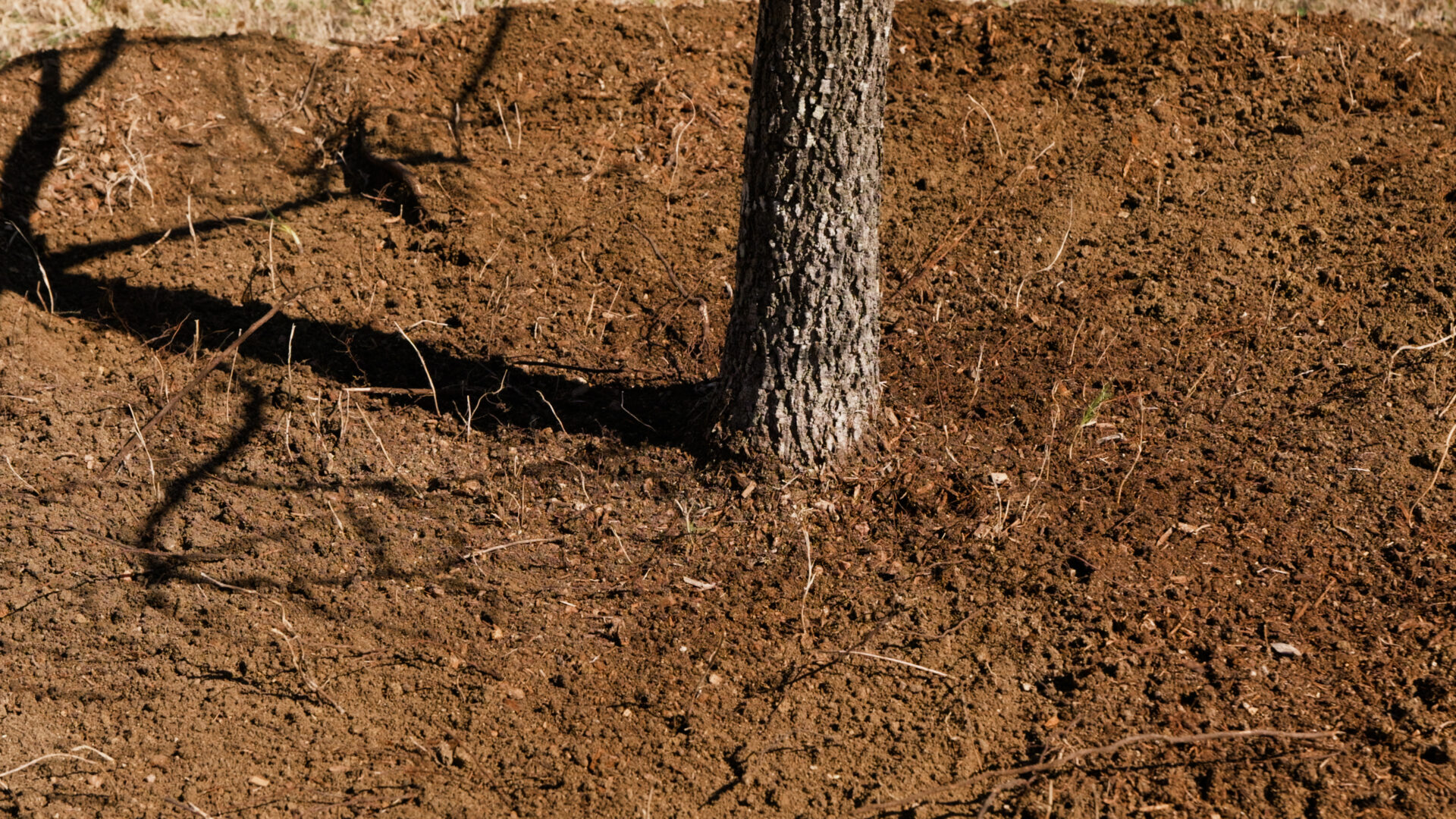
Tree trunk with soil covering root flare in Central Texas yard
Soil buildup over time can bury the root flare and increase the risk of girdling roots.

How to Fix Root Dysfunction at Home

Many cases can be corrected with careful excavation.

Step 1: Remove Mulch

Pull mulch back until you see the natural trunk widening.

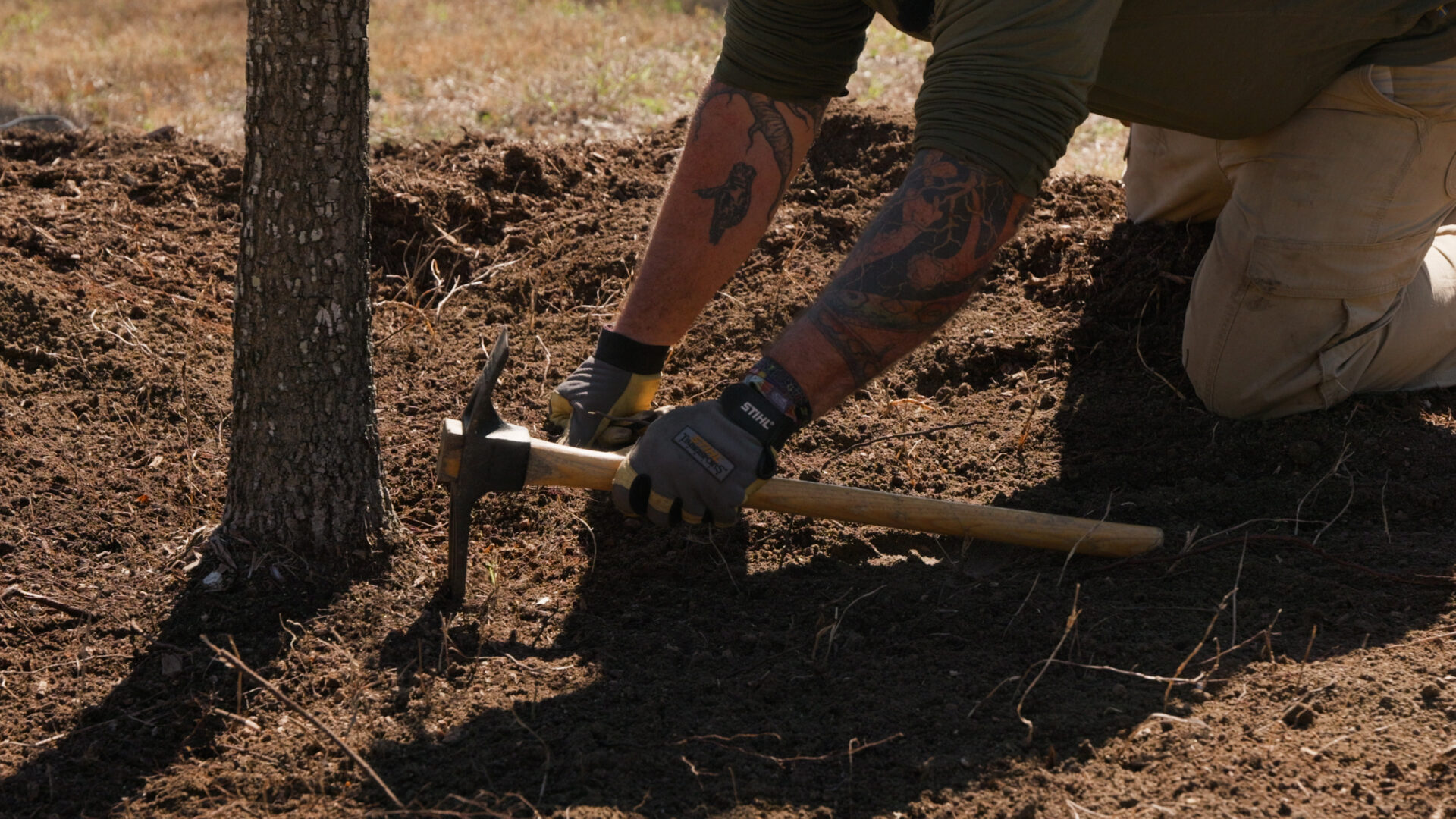
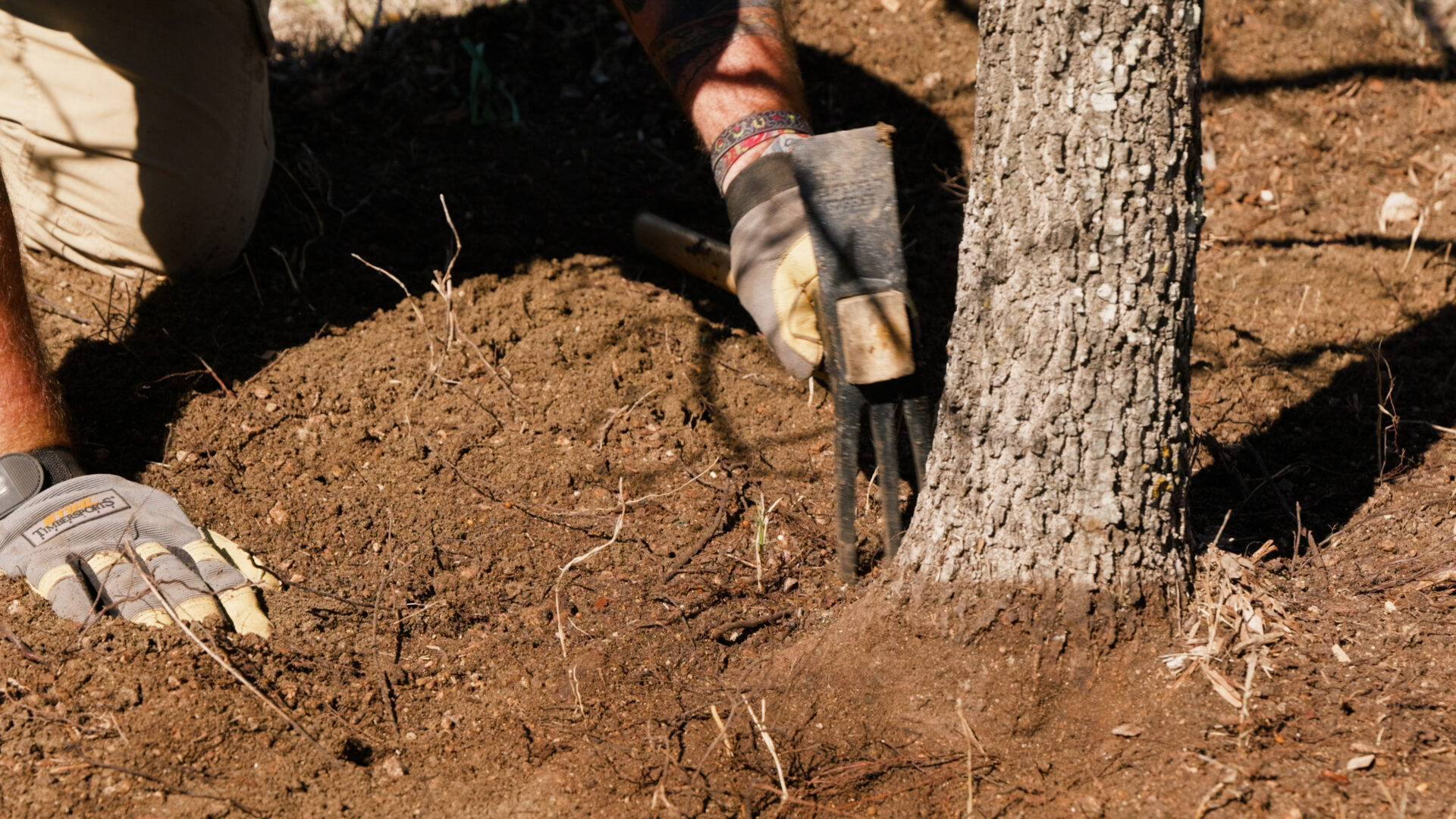
Step 2: Hand-Excavate Carefully

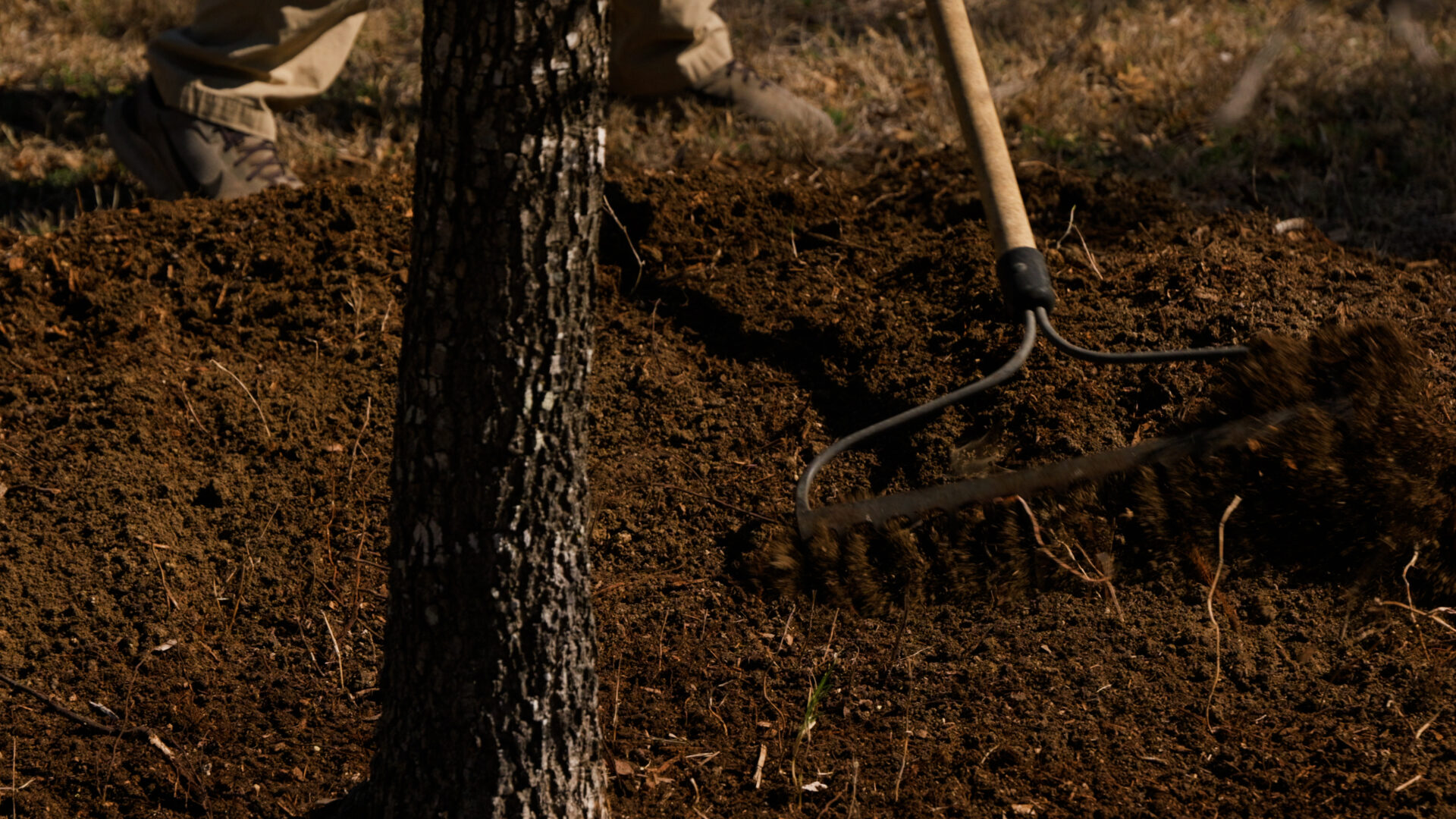
Use gentle tools such as a cultivator or hand rake to remove excess soil. Avoid aggressive digging tools that damage roots.

Breaking compacted soil improves oxygen exchange and root expansion.

Step 3: Identify and Correct Girdling Roots

If roots are encircling the trunk, remove a small segment of the problematic root to interrupt the constriction and encourage radial growth.

Step 4: Restore Proper Mulch Ring

Reapply mulch in a donut shape. Leave a clear gap around the trunk.

Step 5: Water Thoroughly the Same Day

After disturbing roots, deep watering reduces stress and supports recovery.

For additional tree planting and care guidelines, refer to:
Texas Forest Service Tree Care Resources

When Professional Air Excavation Is Needed

Large oaks and mature landscape trees often require specialized tools.

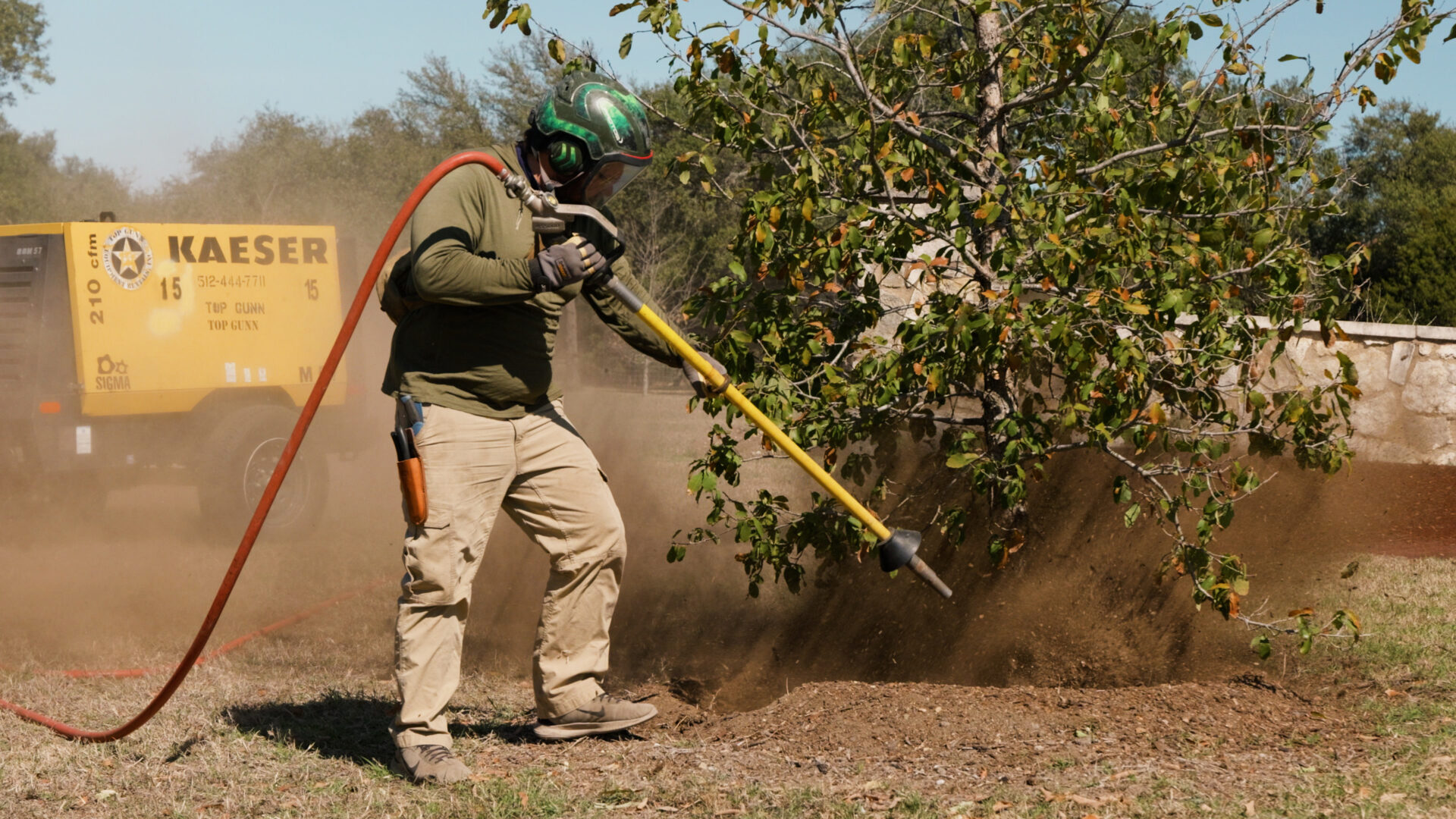
An air spade uses compressed air to remove soil without cutting roots. This allows arborists to:

  • Diagnose deep girdling roots

  • Correct buried root flares

  • Improve soil aeration

  • Perform precise root pruning

For structurally significant trees or advanced decay, professional evaluation is strongly recommended.

If you are in the central Texas region, we provide professional arborist services such as air excavation.

If you are outside our region, the International Society of Arboriculture offers guidance on finding certified arborists:

https://www.treesaregood.org/findanarborist

Air spade exposing buried root flare of landscape tree
Professional correction can restore long-term tree health in advanced cases.

Root Health and Regenerative Land Management

Correcting root dysfunction supports more than tree survival.

Healthy root systems:

  • Improve soil aggregation

  • Increase water infiltration

  • Reduce erosion

  • Support fungal networks

  • Strengthen drought resilience

These outcomes align directly with broader regenerative land goals across Central Texas.

Explore how soil, water, and landscape function intersect in:
Scale, Fragmentation, and Why Good Practices Don’t Always Scale

When roots function properly, landscapes absorb more rainfall and cycle water more effectively. This strengthens entire watershed systems, especially in a region defined by flood and drought extremes.

Aftercare and Soil Recovery

Following root correction:

  • Add high-quality compost or soil conditioner

  • Consider microbial inoculants to restore rhizosphere biology

  • Avoid repeated soil disturbance

  • Monitor irrigation depth and frequency

Healthy soils contain stable aggregates, active microbes, and oxygen-rich pore space. The Soil Science Society of America explains how biological activity drives these functions:

https://www.soils.org/files/about-soils/soils-overview.pdf

Final Thoughts

Central Texas tree root dysfunction is common because of how landscapes are designed and maintained. The issue is often invisible until canopy decline begins.

By restoring proper root flare exposure, correcting girdling roots, and rebuilding soil structure, landowners can dramatically improve tree health and long-term landscape performance.

Healthy roots support healthy soils. Healthy soils support functional water cycles. Functional water cycles support resilient land.

Related Educational Context

For foundational context across land regeneration and water health, visit our Central Texas Land Regeneration Education hub.

Root Dysfunction in Central Texas Trees: How to Diagnose, Fix, and Restore Tree Health

Home / Root Dysfunction in Central Texas Trees Girdling roots encircling the trunk can restrict…
What is Biochar and Does It Actually Work?

Home / What Is Biochar? Science, History, Pros and Cons, and Its Role in Texas…
Limestone Terraces in Central Texas for Erosion Control and Soil Building

Home / Limestone Terraces in Central Texas: Erosion Control, Soil Building, and Hill Country Restoration…
Applying Wildfire Science to Land Stewardship in Central Texas

Home / Applying Wildfire Science to Land Stewardship in Central Texas Companion article to Episode…

Overgrazing in the Texas Hill Country

Home / Overgrazing in the Texas Hill Country Why Timing, Movement, and Recovery Matter More…

Karst Hydrology and Water Movement in the Texas Hill Country

Home / Karst Hydrology and Water Movement in the Texas Hill Country How Fractured Limestone…