
Introduction:
A quick google search on “gmos” or “monsanto” will give you an array of contradictory information. It can be hard to thin out what effects gmos actually produce on our food, health, and environment.
In this article, I will interpret resources from advocates of GMOs to present all of the scientific benefits of this innovative technology and then I will analyze the critics’ replies to these claims.
The PROS; sourced from geneticist Pamela Ronald and the Genetic Literacy Project
Listening to a passionate and persuading Ted Talk by Pamela Ronald, I was able to get a good idea of what a genetically modified organism actually is.
According to Pamela:
- gmos have been used since ancient times!
- The technology has now been perfected for the past two decades and proven to be the most viable source for safety and frugality
- “nourish children around the planet”
The Genetic Literacy Project supports these confident statements made by Pamela.
They add GMOs:
- have economic and health benefit at the farm level, particularly to smallholder farmers in developing countries
- reduce the environmental impact of herbicides and pesticides
- create a reduced impact tilling system for farmers
In conclusion to the above, the technology has societal, health, and environmental benefits.
Unfortunately as I dug deeper into the subject, I found an outweighing amount of information against Genetically Modified crops.
CONS:
“Food has been genetically modified since ancient times”
Here is an educational graph to differentiate between selective breeding and GM breeding.

In order to understand fully, the genes of GMOs are spliced from one organism and placed into another. The genes are chosen for potential thrival of crops in all ecosystems, even degraded lands. The genes can consist of bacteria, viruses, fish or spiders and are spliced into tomatoes, papaya, and rice. Pamela correlates grafting and selective breeding to current GMOs in her ted talk, but these ancient practices are nothing like the complete transgenic alteration she is referring to.
“Cheapest, Safest, and higher yielding technology”
In 2013, a second generation GMO farmer (Chris Huegerich) switched back to conventional seeds. He reported a 15 to 30 yield improvement per acre versus his genetically modified crops. Chris also noted that bags of these intellectually patented seeds could be up to $150 more than standard cropping seeds. Imagine what that cost compares to in other countries like India, where farmers are already struggling to make a living.
Speaking of “safest”, the technology is also embedded with BT. BT,quoted by Ronald, is “safer than table salt” but Seralini would beg to differ. A study of monsanto’s (a lead producer of GMOs) data found detrimental effects to rats fed mutated maize.
“Five years ago the [GMO seeds] worked,” said farmer Christ Huegerich, who along with his father planted GMO seeds. “I didn’t have corn rootworm because of the Bt gene, and I used less pesticide. Now, the worms are adjusting, and the weeds are resistant. Mother Nature adapts.”
Feeding the growing population
One of the biggest claims of this new technology is the ability to feed the global population. One of the biggest myths is that there is not enough food being produced currently to feed the global population. A study by the renowned Mcgill college reported there is enough food being produced today to feed ten billion people. Access to this food is not currently possible to many third world countries because of monetary causes (discussed above).
Using solutions like this one people everywhere can have access to food for cheap, if not for free!
Use of sprayed insecticides/pesticides lessened with GMOs
Stated by the Genetic Literacy Project (see above), reduced use of these chemicals will lead to a healthier, less intensive product. Again we see a contradiction; BT and Roundup are both used frequently with GM products. Not only are both toxic, but they are fossil fuel consuming to create! Did Monsanto overlook this? It is hard to believe when they started their company as a chemical industry….
Less Tilling?
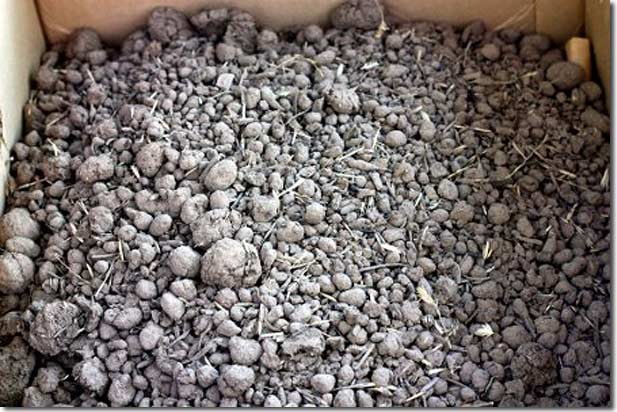
Another claim, is the reduction practices of tilling the soil. TIlling is an energy intensive method to create a better bedding for crops that have leached out nutrients from previous crops. Funny thing is there are already ancient methods for no till farming. One of these methods is the seed ball; made with soil, clay, and seeds. Little money or effort is involved.
Supporting monocropping
Lastly, Genetically Modified Organisms are bandaid for the already failing method of agriculture. It is supporting a monoculture farming method which eliminates biodiversity of species. Diversity of fauna and flora is essential for a long lasting, resilient ecosystem. The diverse amount of species guards against disease, encourages longevity, and provides more nutrients to local ecology.
Genetically Modified foods are hardly a fix when it is built on an inefficient model of agriculture to begin with. We are in a crisis of climate change. The questions that GMOs pose are pertinent to our future, such as feeding a global human population and reversing environmental degradation, but the methods involved are not feasible. We need to look at the causes of climate change. We need to debunk myths of food production and allocation. How do we create a future of food for all?
Resources:
- http://www.ted.com/talks/pamela_ronald_the_case_for_engineering_our_food
- http://www.geneticliteracyproject.org/2015/04/29/are-gmos-increasing-profits-of-farmers-and-biotech-companies-at-environments-expense/
- https://gmoanswers.com/studies/get-know-gmos-month-science-gmos
- http://www.responsibletechnology.org/gmo-basics/the-ge-process
- http://modernfarmer.com/2013/12/post-gmo-economy/
- http://www.gmwatch.org/component/content/article/13142
- http://www.offthegridnews.com/how-to-2/farmers-abandoning-gmo-seeds-and-the-reason-will-surprise-you/
- http://www.worldhunger.org/articles/Learn/world%20hunger%20facts%202002.htm#Does_the_world_produce_enough_food_to_feed_everyone
- http://www.huffingtonpost.com/eric-holt-gimenez/world-hunger_b_1463429.html
- http://earthopensource.org/gmomythsandtruths/sample-page/5-gm-crops-impacts-farm-environment/5-14-myth-gm-crops-reduce-energy-use/
- http://permaculturenews.org/2014/06/18/making-seedballs-ancient-method-till-agriculture/